
n today’s digital age, it’s almost impossible to avoid long hours hunched over smartphones, computers, and other gadgets. This constant leaning forward can lead to “tech neck” – a term used to describe the pain and poor posture caused by excessive screen time. Tech neck, along with the general habit of slouching, negatively affects spinal alignment and overall health. The good news? Yoga for posture correction offers a powerful way to address these issues and restore balance to your body.
In this blog post, we’ll explore how modern habits affect your posture, why good posture is so important, and how six specific yoga poses can help you improve your posture and alleviate discomfort caused by tech neck and slouching.
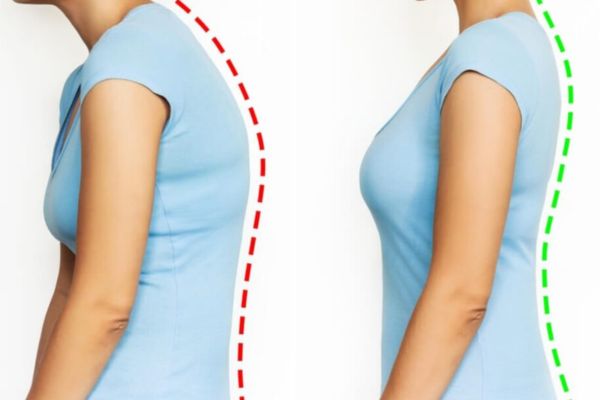
How Modern Habits Affect Your Posture
Today, more than ever before, people spend long hours sitting at desks, staring at computer screens, or looking down at their phones. This extended screen time encourages slouching and forward head posture, two common causes of tech neck. When you hunch forward for hours at a time, the muscles in your upper back become weak, while the muscles in your chest tighten. This imbalance puts unnecessary pressure on your spine, leading to pain, stiffness, and discomfort.
In addition to the physical discomfort caused by tech neck and slouching, poor posture can affect your breathing, mood, and energy levels. Over time, the misalignment of the spine can even cause tension headaches, shoulder pain, and lower back issues. In extreme cases, this can lead to chronic pain and long-term damage to your musculoskeletal system.
Why Good Posture Matters
Good posture is essential for a healthy body. When your spine is properly aligned, your body functions more efficiently, and you experience less pain and discomfort. Good posture helps:
- Improve Spinal Alignment: Proper posture maintains the natural curvature of your spine, reducing pressure on the discs, muscles, and ligaments.
- Reduce Neck and Back Pain: By aligning your body correctly, you reduce the strain on your muscles and joints, preventing pain and stiffness.
- Enhance Breathing and Circulation: Good posture opens up your chest, allowing for deeper breaths and better oxygen flow throughout your body.
- Boost Confidence and Mood: Standing tall not only makes you look more confident, but it can also positively impact your mood and mental state.
As we’re increasingly aware of the risks of bad posture, yoga has emerged as one of the best ways to help improve alignment and counteract the effects of modern technology.
Yoga for Posture Correction
Yoga provides a holistic approach to correcting posture, as it focuses on strength, flexibility, and body awareness. Through regular yoga practice, you can build the muscle strength necessary to support a neutral spine while simultaneously stretching tight muscles that may be contributing to poor posture. Let’s look at six effective yoga poses that can help you combat tech neck and slouching, while improving your overall posture.
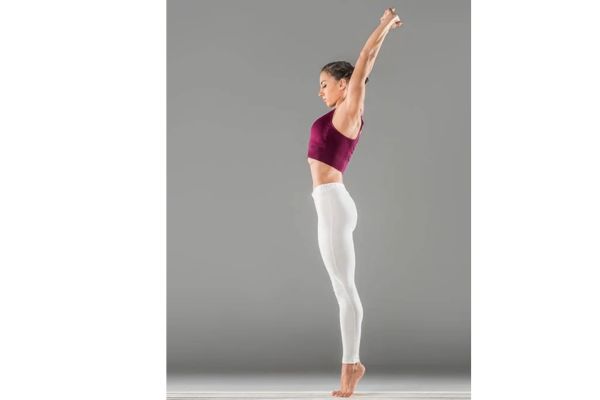
1. Mountain Pose (Tadasana)
Mountain Pose is often referred to as the foundation of all standing yoga poses. This simple yet powerful pose teaches you how to align your body and become aware of your posture.
How to Do Mountain Pose:
- Stand tall with your feet hip-width apart and your arms by your sides.
- Distribute your weight evenly across both feet, grounding through all four corners of each foot.
- Engage your thighs, lift your kneecaps, and draw your belly button toward your spine.
- Reach the crown of your head upward while gently lifting your chest, keeping your shoulders relaxed.
- Hold for 30 seconds to 1 minute while focusing on your alignment.
Benefits: Mountain Pose is a great posture-correcting pose as it encourages proper alignment of your spine, neck, and shoulders. It also builds awareness of your body’s posture in everyday life.
2. Cat-Cow Pose (Marjaryasana-Bitilasana)
Cat-Cow is a dynamic flow between two poses that targets the spine, helping to release tension in the back and neck. It’s especially helpful for those dealing with tech neck as it helps improve spinal mobility and encourages proper alignment.
How to Do Cat-Cow Pose:
- Start in a tabletop position with your hands directly under your shoulders and knees under your hips.
- Inhale as you drop your belly toward the mat, lifting your chest and tailbone to the sky (Cow Pose).
- Exhale as you round your spine, drawing your chin to your chest and tailbone toward the floor (Cat Pose).
- Continue flowing between these two movements for 1 to 2 minutes, focusing on the movement of your spine.
Benefits: Cat-Cow stretches the neck, back, and chest, alleviating the tightness that builds up from slouching or tech neck. It also improves flexibility in the spine and enhances body awareness.
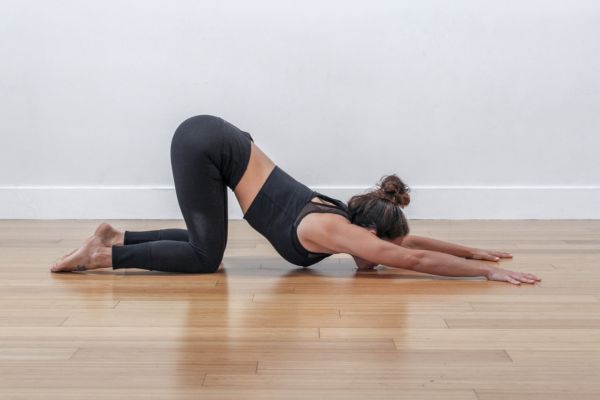
3. Chest Opener Pose (Anahatasana)
Slouching and poor posture can lead to tightness in the chest and shoulders, especially for those who spend a lot of time hunched forward. The Chest Opener Pose gently stretches the chest, shoulders, and spine, encouraging the upper body to open up.
How to Do Chest Opener Pose:
- Start in a tabletop position with your knees under your hips and your hands under your shoulders.
- Walk your hands forward on the mat, keeping your hips aligned with your knees.
- Lower your chest toward the ground while keeping your arms extended and your forehead resting on the mat.
- Hold for 30 seconds to 1 minute, breathing deeply and allowing your chest to expand.
Benefits: This pose opens the chest and stretches the front of the shoulders, which helps counteract the rounded shoulders and forward head posture caused by slouching.
4. Downward-Facing Dog (Adho Mukha Svanasana)
Downward-Facing Dog is a popular yoga pose that stretches the entire body, but it’s especially beneficial for stretching the back, shoulders, and hamstrings. This pose helps improve spinal alignment and strengthens the upper back, which is key to combating tech neck.
How to Do Downward-Facing Dog:
- Start in a tabletop position with your hands and knees on the mat.
- Lift your hips toward the ceiling and straighten your legs, pressing your heels down toward the floor.
- Keep your arms shoulder-width apart and your legs hip-width apart.
- Relax your head between your arms, allowing your ears to align with your upper arms.
- Hold for 30 seconds to 1 minute.
Benefits: Downward Dog strengthens the upper back and stretches the hamstrings, helping to lengthen and align the spine. This pose also opens the chest, improving posture.
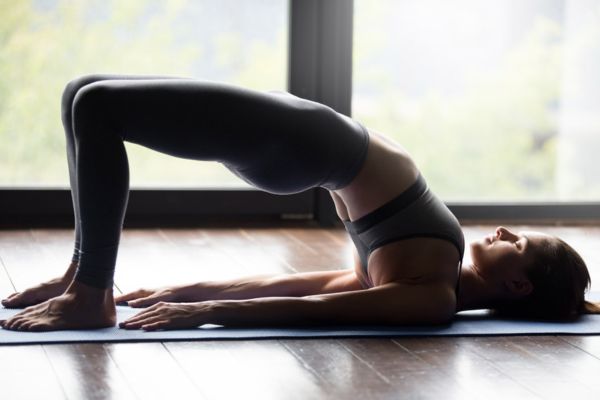
5. Bridge Pose (Setu Bandhasana)
Bridge Pose is a gentle backbend that strengthens the glutes and lower back while opening the chest and improving spinal mobility. It’s an excellent pose for those looking to correct slouching and improve posture.
How to Do Bridge Pose:
- Lie on your back with your knees bent and feet flat on the floor, hip-width apart.
- Press your feet into the mat as you lift your hips toward the ceiling, engaging your glutes and lower back muscles.
- Reach your arms along the floor, palms facing down.
- Hold the pose for 30 seconds to 1 minute, ensuring that your shoulders remain relaxed and your chest is open.
Benefits: Bridge Pose strengthens the lower back and glutes, which helps support proper posture. It also stretches the chest and spine, combating the effects of slouching.
6. Seated Forward Fold (Paschimottanasana)
Seated Forward Fold is a great way to stretch the hamstrings, lower back, and spine. This forward bend encourages lengthening of the spine and helps to release tension in the back, especially for those who spend long hours sitting at desks or on couches.
How to Do Seated Forward Fold:
- Sit on the floor with your legs extended straight in front of you.
- Inhale and lengthen your spine, reaching the crown of your head toward the ceiling.
- Exhale and hinge at your hips, folding forward over your legs. Keep your back long, and avoid rounding your spine.
- Hold for 30 seconds to 1 minute, breathing deeply.
Benefits: Seated Forward Fold stretches the back and hamstrings while promoting spinal lengthening, which helps counteract the forward curve caused by slouching.
Final Thoughts: Yoga for Posture Correction
Yoga for posture correction is an effective and holistic way to combat the negative effects of tech neck and slouching. By regularly practicing the poses outlined above, you can strengthen your back muscles, improve flexibility, and restore balance to your spine. This will not only alleviate pain and discomfort, but also promote better overall health and well-being.
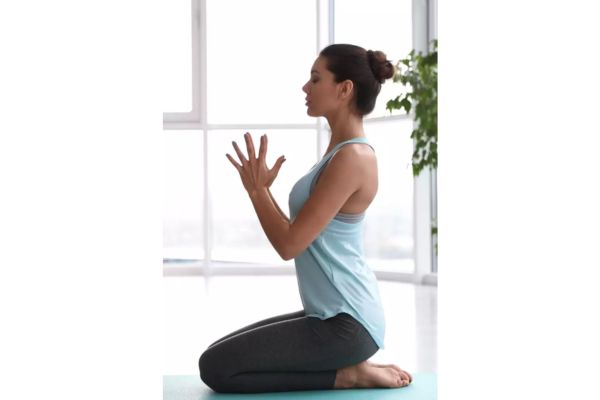
Incorporating these yoga poses into your daily routine, combined with mindful awareness of your posture, will go a long way toward improving your spinal alignment and reducing the effects of modern habits on your body.
So, the next time you find yourself hunched over your phone or computer, remember that yoga can be your remedy for better posture and a healthier spine. Your body will thank you!