
Introduction: A New Age Epidemic—Digital Eye Strain
In our hyper-connected world, the average adult spends over 7 hours per day staring at digital screens. Whether it’s for work, communication, or entertainment, screen time is unavoidable. But this digital dependency has given rise to a modern-day condition known as Digital Eye Strain (DES), or Computer Vision Syndrome. Common symptoms include dry eyes, blurred vision, headaches, and even neck and shoulder pain.
While eye drops and blue light filters offer temporary relief, eye yoga exercises present a sustainable, natural solution rooted in ancient yogic traditions. Unlike generalized advice like “take breaks every 20 minutes,” eye yoga offers targeted muscle engagement and neurological benefits.
This blog dives deep into three time-tested eye yoga techniques—Palming, Blinking, and Trataka—and explores how they offer tangible relief from digital eye fatigue.

What Is Eye Yoga and How Does It Work?
Eye yoga refers to a series of structured exercises aimed at improving the flexibility, strength, and focus of the extraocular muscles—the six muscles that control eye movement. Just like any other muscle group in the body, these muscles can experience fatigue and imbalance, especially under constant stress from screens.
Moreover, eye yoga influences the parasympathetic nervous system, triggering relaxation responses and improving tear production and focus. It doesn’t just address physical strain but also mental exhaustion associated with excessive visual stimulation.
Understanding Digital Eye Strain: A Deeper Look
Digital Eye Strain (DES) occurs due to the continuous focus and limited blinking associated with prolonged screen exposure. Here’s how it impacts your vision:
- Reduced blink rate: Normal blinking occurs 15-20 times per minute. This drops to 5-7 blinks per minute while using screens.
- Poor accommodation: Your eyes’ ability to shift focus between near and far objects deteriorates.
- Visual fatigue: Constant exposure to blue light can cause oxidative stress in the retina and lens.
- Ciliary muscle stress: The muscle that helps in focusing becomes overworked, causing strain and blurred vision.
This physiological strain is where targeted eye yoga exercises provide immediate and long-term benefits.

Eye Yoga Exercise #1: Palming – Restore Warmth and Relaxation
Palming is a simple yet potent yogic technique that relaxes the optic nerve, improves circulation around the eyes, and calms the nervous system.
How to Perform Palming:
- Rub your palms vigorously for 10–15 seconds until you feel heat.
- Close your eyes and gently cup your palms over them.
- Avoid putting pressure directly on the eyes.
- Breathe deeply and visualize darkness or calming imagery.
- Hold the position for 2–3 minutes.
Why It Works:
- The heat from the palms improves blood flow to the eye region, reducing muscular tension.
- It stimulates the oculocardiac reflex, lowering stress-induced eye pressure.
- Regular palming enhances visual awareness and counteracts the drying effects of blue light.
✅ Expert Tip: Do this every hour during long screen sessions to prevent cumulative strain.

Eye Yoga Exercise #2: Conscious Blinking – Lubrication Through Awareness
Blinking is an involuntary action, but when done consciously, it becomes a tool for hydration, clarity, and focus.
How to Practice Conscious Blinking:
- Sit comfortably and look straight ahead.
- Blink slowly 10–15 times.
- Pause, close your eyes gently, and relax for 10 seconds.
- Repeat the process 3–4 times.
Scientific Backing:
- Conscious blinking activates the Meibomian glands, which release oils essential for tear film stability.
- It spreads the tear layer evenly across the cornea, preventing evaporative dry eye, a key cause of digital eye strain.
- Blinking also resets the neural circuits of visual processing, enhancing attention.
✅ Pro Tip: Combine blinking exercises with eye drop supplements like carboxymethylcellulose for holistic relief.
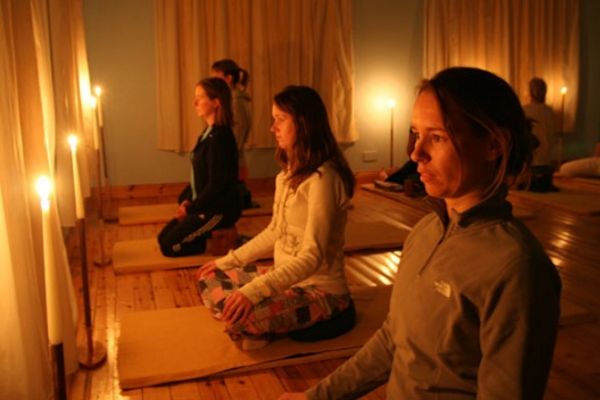
Eye Yoga Exercise #3: Trataka – Candle Gazing for Mental and Visual Clarity
Trataka is a powerful concentration technique mentioned in Hatha Yoga Pradipika. It involves fixing the gaze on a single point, usually a candle flame, without blinking.
Steps for Trataka:
- Sit in a dark, quiet room. Place a candle at eye level, about 3 feet away.
- Gaze at the flame without blinking for 30 seconds to 1 minute.
- When tears form or eyes feel strained, gently close your eyes.
- Visualize the afterimage in your mind’s eye.
- Repeat the process for up to 5 rounds.
Benefits:
- Strengthens the ciliary and extraocular muscles responsible for fine focusing.
- Enhances retinal sensitivity and dynamic visual acuity.
- Reduces eye floaters, improves contrast sensitivity, and sharpens focus.
- Offers deep neurological relaxation, reducing mental clutter and sleep disturbances.
✅ Use Case: Ideal as a nighttime ritual for those suffering from insomnia and screen-induced overstimulation.
Bonus Eye Yoga Techniques to Enhance the Practice
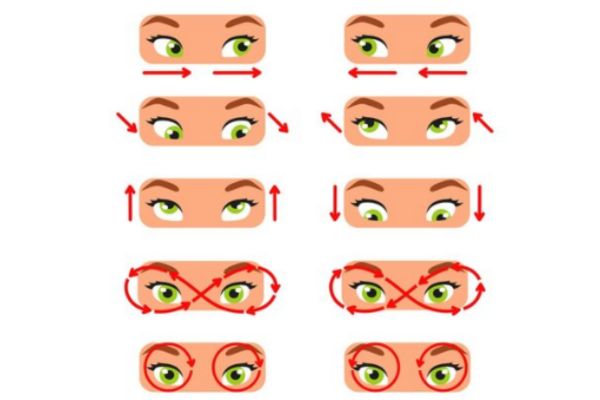
1. Figure-8 Eye Movements
Trace a horizontal figure-8 in the air with your eyes. Improves ocular motility and spatial awareness.
2. Eye Zooming
Hold your thumb at arm’s length, focus on it, then slowly bring it toward your nose while maintaining focus. This strengthens accommodation reflexes.
3. Side-to-Side and Diagonal Eye Movements
Shifting your gaze in structured directions improves eye coordination and range of motion.
Precautions and Contraindications
While eye yoga is safe for most individuals, certain precautions should be observed:
- Avoid Trataka if you suffer from epilepsy or glaucoma.
- Don’t overdo the exercises; fatigue can worsen symptoms.
- Consult an ophthalmologist before starting if you have existing eye conditions.
Integrating Eye Yoga into Your Daily Routine
For best results, eye yoga should be integrated into daily habits, especially for those in screen-heavy environments.
| Time of Day | Suggested Practice | Duration |
|---|---|---|
| Morning | Eye movements + Palming | 5 mins |
| During Work Breaks | Conscious blinking + Palming | 3-5 mins |
| Evening | Trataka + Palming | 10-15 mins |
Combine this with ergonomic lighting, 20-20-20 rule, and screen brightness management for complete eye health hygiene.

Long-Term Benefits of Eye Yoga: What the Research Shows
Emerging evidence supports the efficacy of eye yoga:
- A study in the International Journal of Yoga (2018) showed that six weeks of Trataka significantly improved visual reaction time and concentration.
- Research published in Evidence-Based Complementary and Alternative Medicine found that blinking and palming helped reduce symptoms in video display terminal users.
- Traditional Ayurvedic texts like Ashtanga Hridayam cite Netra Tarpana and Trataka as foundational visual therapies, validating eye yoga’s ancient roots.
Conclusion: Eye Yoga is Not a Trend, It’s a Necessity
As we transition deeper into the digital age, our eyes are paying the price. The solution isn’t just in screens with lower brightness or expensive blue-light glasses. It lies in a return to conscious visual hygiene through eye yoga exercises like palming, blinking, and Trataka.
With as little as 15 minutes a day, you can experience a dramatic shift in how your eyes feel, focus, and perform—even in screen-dense environments.
FAQs: Eye Yoga and Digital Eye Strain
Q1. Can eye yoga cure myopia or hyperopia?
No, but it can reduce eye fatigue, slow progression, and enhance visual comfort.
Q2. How soon will I see results?
Many users report relief in 2-3 weeks of consistent practice.
Q3. Is Trataka safe for children?
Yes, but limit the practice to 1–2 minutes under supervision.
त्राटक क्रिया केल्यामुळे माझा चष्म्याचा नंबर कमी झाला आणि यामुळे नंबर कमी असेल तर चष्मा जातो सुद्धा परंतु रोज कमीत कमी दोन वेळा, सतत सहा महिने करणे आवश्यक आहे. चांगली माहिती दिल्याबद्दल खूप खूप धन्यवाद श्वेता म्याडम ????
Dhanyavad Sir.
धन्यवाद गणेश सर.
Nice