
Yoga is often seen through the lens of asanas—those graceful postures we admire on the mat. But the roots of yoga go much deeper. At its heart, yoga is a philosophy, a way of understanding the mind, body, and spirit in harmony. The ancient Yoga Sutras of Patanjali, written more than 2,000 years ago, provide timeless guidance that remains deeply relevant in modern life.
This article explores how the philosophy of yoga, especially through the Sutras, can transform the way we live, work, and relate to ourselves and others. It is not about flexibility of the body but about flexibility of the mind and openness of the heart.
The Essence of Yoga Beyond the Mat
When we hear the word yoga today, it’s easy to think of classes, poses, or maybe even a trendy studio. Yet Patanjali’s Yoga Sutras hardly mention postures at all. Instead, they focus on the mind: its nature, its fluctuations, and the path to inner stillness.
At its core, yoga means union—a state where our inner self is not pulled in every direction by distractions, stress, or desires. The Sutras remind us that real yoga is about cultivating clarity and peace that extend into every aspect of daily life.
The Sutras as a Guidebook for Life
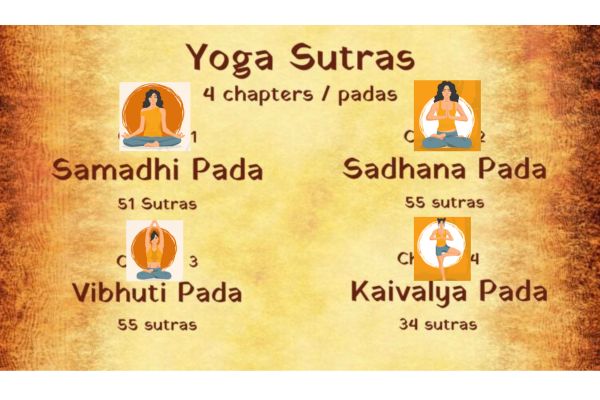
The Yoga Sutras are structured in four chapters, or padas:
- Samadhi Pada – on concentration and meditation.
- Sadhana Pada – on practice and discipline.
- Vibhuti Pada – on spiritual powers and expansion.
- Kaivalya Pada – on liberation and freedom.
Though written in the context of spiritual seekers, their wisdom is surprisingly practical. For instance, in moments of anger, anxiety, or confusion, the Sutras offer clear principles to regain balance.
Let’s explore some of the most meaningful lessons we can apply today.
Lesson 1: Still the Fluctuations of the Mind
The second sutra—“Yoga chitta vritti nirodhah”—is perhaps the most famous. It translates to: Yoga is the stilling of the fluctuations of the mind.
Think of how our mind jumps from thought to thought, like a restless monkey. These fluctuations create stress, dissatisfaction, and distraction. Yoga teaches that when we learn to calm these movements, clarity and peace arise.
Daily life application:
- Practice mindful breathing when you feel overwhelmed.
- Create short pauses during the day—before meetings, before meals, or before sleep—to settle the mind.
- Limit constant input from phones and screens; give the mind a chance to rest.
Lesson 2: The Eight Limbs of Yoga
One of the greatest contributions of the Sutras is the Ashtanga or Eight Limbs of Yoga. They provide a holistic framework, not just for spiritual practice, but for ethical and balanced living.
- Yamas – ethical guidelines (non-violence, truthfulness, non-stealing, moderation, non-possessiveness).
- Niyamas – personal observances (cleanliness, contentment, discipline, self-study, surrender to higher wisdom).
- Asana – physical postures.
- Pranayama – breath control.
- Pratyahara – withdrawal of senses.
- Dharana – concentration.
- Dhyana – meditation.
- Samadhi – union, or pure awareness.
Daily life application:
- Practice ahimsa (non-violence) not just physically, but in speech—choose kind words even in conflict.
- Cultivate santosha (contentment) by appreciating small moments of joy each day.
- Dedicate a few minutes daily to pranayama—deep, conscious breathing—to bring calm into a busy schedule.

Lesson 3: Discipline and Consistency Matter
In the Sutras, Patanjali emphasizes abhyasa (consistent practice) and vairagya (non-attachment). Together, they form the foundation of growth.
It’s not about doing everything perfectly or instantly. Progress comes slowly, through steady effort, without clinging to immediate results.
Daily life application:
- Establish a simple morning routine: maybe 5 minutes of breathwork, 10 minutes of gentle stretches, and a few moments of quiet reflection.
- Avoid the trap of comparing your journey with others; each person’s practice unfolds uniquely.
- Celebrate progress in subtle ways—less reactivity, more patience, deeper awareness.
Lesson 4: The Power of Awareness
The Sutras highlight that much of our suffering comes from avidya—misunderstanding or ignorance about who we truly are. We often identify only with our roles, possessions, or emotions.
Through awareness, we realize that we are not just the mind or the body; we are the observer behind them. This shift brings profound freedom.
Daily life application:
- When caught in anger, notice: “I am experiencing anger, but I am not the anger itself.”
- Practice journaling to witness recurring thought patterns without judgment.
- Use meditation as a mirror to observe the flow of the mind.

Lesson 5: Yoga as a Way of Relating
The Yamas, the first limb of yoga, remind us that philosophy is not only about personal growth but also about how we connect with others.
- Ahimsa (non-violence): Choose compassion over harshness.
- Satya (truthfulness): Speak with honesty, yet with kindness.
- Aparigraha (non-possessiveness): Let go of excessive attachment to material things or rigid opinions.
Daily life application:
- In relationships, practice deep listening without rushing to respond.
- Simplify your lifestyle; notice how less clutter can mean more clarity.
- Share yoga’s benefits with others not by preaching, but by embodying calmness and compassion.
Lesson 6: Surrender and Trust
One of the niyamas is Ishvara pranidhana—surrendering to a higher consciousness, however you define it. In practical terms, this is about humility and trust. We do our best but accept that some outcomes are beyond control.
Daily life application:
- When facing uncertainty, repeat affirmations of trust: “I do my part and release the rest.”
- Incorporate gratitude practices—acknowledge small blessings daily.
- Replace resistance with openness: sometimes life’s challenges are teachers in disguise.
Lesson 7: Yoga as a Lifestyle, Not an Activity
The Sutras do not treat yoga as something separate from daily existence. Every moment—how we breathe, eat, speak, think—can reflect yoga philosophy.
Daily life application:
- Eat mindfully, respecting food as nourishment.
- Walk with awareness, feeling each step as a meditation.
- Approach work not as a burden, but as an opportunity to serve and grow.
Integrating the Sutras into Modern Living
Living yoga philosophy doesn’t require renouncing the world or meditating in caves. Instead, it invites us to infuse awareness into simple routines: cooking, working, parenting, commuting.
Some practical ways to integrate Sutras today:
- Dedicate specific times for digital detox.
- Start meetings at work with a minute of silence or breath awareness.
- Teach children simple mindfulness practices—like noticing their breath when upset.
Why These Lessons Matter Today
We live in times of constant stimulation, endless comparison, and deep stress. Yoga philosophy provides tools to counter this imbalance. It helps us cultivate:
- Resilience in the face of challenges.
- Clarity in a world full of noise.
- Compassion in relationships.
- Inner peace that is independent of external circumstances.
By practicing these lessons, we begin to see yoga not as something we “do,” but as something we “live.”

Final Reflection
The Yoga Sutras are not just ancient verses but living wisdom. Their beauty lies in their simplicity: they remind us that peace and joy are not found by chasing outside but by turning inward.
When applied in daily life, Yoga Philosophy for Daily Life becomes more than a practice—it becomes a path to greater awareness, kindness, and freedom.
So the next time you step on your yoga mat—or even when you’re simply standing in line, cooking dinner, or walking to work—remember: yoga is happening right there, in the way you breathe, think, and choose to act.