
For millions of people worldwide, osteoporosis slowly reshapes the spine long before symptoms appear. It weakens the vertebrae, reduces bone density, disrupts alignment, and, in many cases, creates the sensation of a “gap” or imbalance in the spinal column. While medication and dietary interventions play vital roles, movement remains the most accessible and transformative therapy. Among the countless exercise options available, two stand out for their evidence-backed benefits and everyday practicality: walking and yoga. When combined strategically, they create a powerful, holistic approach to preserving spinal integrity, maintaining posture, improving balance, and reducing the risk of vertebral compression fractures.
This article uncovers the science, philosophy, and practical application of this potent walking-yoga combination for individuals living with osteoporosis or low bone density.
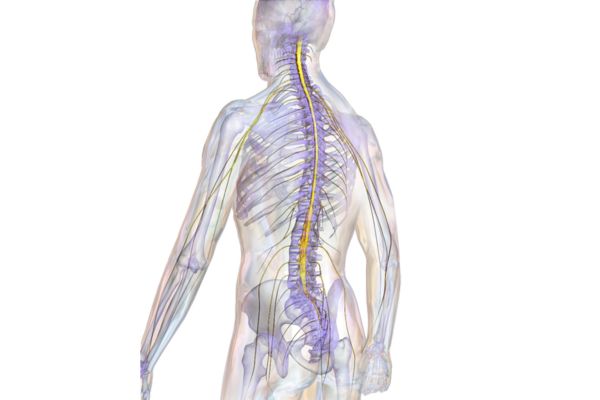
Understanding the “Gap” in the Spine: What Really Happens in Osteoporosis
People with osteoporosis often describe a feeling of “gap,” “space,” or “looseness” in the spine. This is not a literal empty space—rather, it indicates loss of structural harmony among the vertebrae.
Common contributors include:
1. Progressive Bone Loss
Osteoporosis causes thinning of vertebral bones, decreasing their ability to bear load. As the structure weakens, vertebrae may settle unevenly, creating mechanical imbalance.
2. Disc Degeneration
Age-related wear and tear can further reduce the cushioning between vertebrae. This adds to the internal feeling of “space” or instability.
3. Postural Collapse
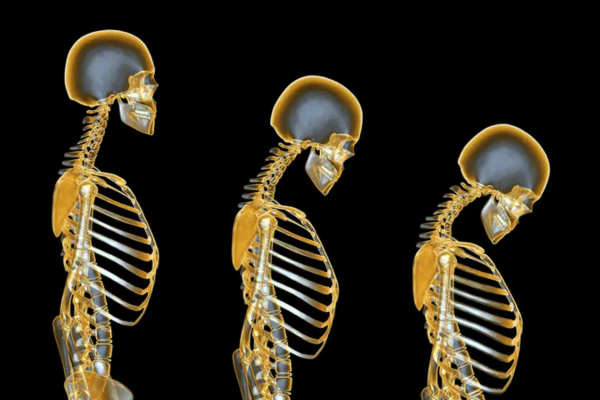
Kyphosis (forward rounding of the spine) can develop when bones are too weak to maintain upright posture. This significantly disrupts spinal integrity.
4. Muscle Deconditioning
Weak back extensors, tight hip flexors, and unstable core muscles all contribute to spinal misalignment and functional “gaps.”
The goal of movement therapy, therefore, is not just to strengthen bones—it is to retrain posture, build neuromuscular stability, and restore spinal harmony.
Why Walking Matters: The Foundation of Bone-Building Movement
Walking, often underestimated, is one of the most powerful, safe, and research-supported interventions for osteoporosis. It engages major muscle groups, stimulates bone remodeling, and helps preserve mobility through gentle loading.
Here is why walking holds such immense therapeutic value:
1. Weight-Bearing Impact Stimulates Bone Growth
Each step generates micro-vibrations that travel through the spine and hips. These mechanical signals activate osteoblasts—the cells responsible for building new bone. Regular walking is thus a natural, drug-free stimulus for bone regeneration.
2. Improves Spinal Alignment Through Reciprocal Movement
Walking encourages healthy alternation between left and right sides of the body (cross-crawling pattern). This improves muscular balance and encourages the spine to remain upright instead of collapsing into kyphosis.
3. Enhances Blood Circulation to Disc and Vertebral Tissue
Although discs have no direct blood supply, movement helps deliver oxygen and nutrients indirectly, promoting healthier spinal structures.
4. Reduces Risk of Falls
Walking boosts gait stability, proprioception, and leg strength—critical for preventing fractures caused by falls, which account for the majority of osteoporotic injuries.
Even 20–30 minutes of brisk walking daily can significantly enhance bone metabolism and spinal resilience.
Why Yoga Complements Walking: The Missing Half of the Solution
While walking works on bone stimulation and movement symmetry, yoga addresses the equally important aspects of:
- core strengthening
- flexibility
- balance
- spinal awareness
- breath-body coordination
- posture correction
For people with osteoporosis, gentle, alignment-based yoga is considered one of the safest and most effective complementary practices.
1. Builds Back Extensor Strength
Weak back extensors are closely tied to vertebral fractures. Yoga poses such as
Bhujangasana (Cobra Pose),
Salabhasana (Locust Pose), and
Setu Bandhasana (Bridge Pose)
strengthen these muscles without placing excessive stress on the spine.
2. Encourages Disc-Friendly Movements
Slow, controlled spinal extensions improve disc spacing and encourage natural curvature. Yoga’s emphasis on mindful movement also prevents sudden, jerky actions that may harm fragile vertebrae.
3. Trains Deep Core Stability
Unlike gym workouts that target superficial muscles, yoga builds stability in the transverse abdominis, pelvic floor, and multifidus—core muscles essential for spinal integrity.
4. Improves Balance and Fall Prevention
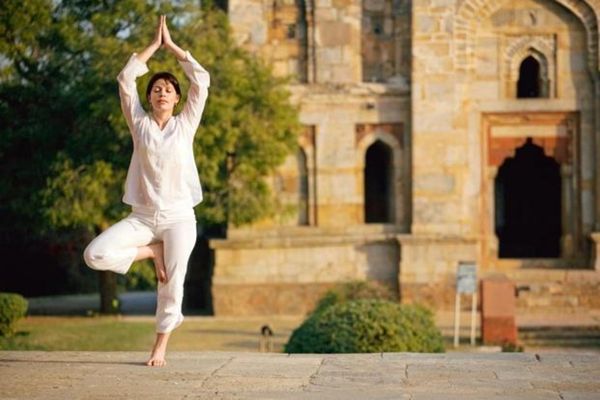
Poses like Vrikshasana (Tree Pose) and Utkatasana (Chair Pose) strengthen leg muscles while improving proprioception and coordination.
5. Supports Posture Correction
Yoga is, fundamentally, a practice of awareness. Posture improves not only through physical strengthening but through neurological re-education.
This combination of physical, neuromuscular, and mindful elements creates a therapeutic environment ideal for individuals managing osteoporosis.

Walking + Yoga: Why the Combination Is a Game Changer for Spinal Health
Individually, both walking and yoga offer significant benefits. But when integrated into a structured routine, their synergy creates extraordinary results.
1. Walking Loads the Bones; Yoga Aligns Them
Walking provides the bone-building stimulus.
Yoga ensures the body distributes that load correctly.
This prevents uneven stress on already-fragile vertebrae.
2. Yoga Improves Gait Mechanics
A person who practices yoga stands taller, engages the core better, and moves with fluid coordination. This leads to more stable, efficient walking strides.
3. Walking Warms the Body for Safer Yoga Practice
Warm muscles reduce injury risk and allow for deeper, safer range of motion.
4. Together, They Address Both Macro & Micro Movements
- Walking = gross motor movement (entire body rhythm)
- Yoga = fine motor control (deep stabilizers and posture muscles)
This dual approach restores harmony to the spine.
5. Enhances Mood & Reduces Fear of Movement
Many individuals with osteoporosis become fearful of exercise. Walking lifts mood, reduces anxiety, and increases confidence. Yoga adds relaxation and mind-body grounding.
Together, they create a sustainable routine that supports physical and emotional well-being.
How Walking and Yoga Help “Bridge the Gap” in the Spine
Let’s return to the central idea: the spinal “gap.”
Through a combination of mechanical loading, alignment correction, and neuromuscular activation, walking + yoga helps restore balance in four major ways:
1. Re-aligns Vertebral Stacking
Improved posture reduces asymmetry in disc spacing, relieving pressure on weak vertebrae.
2. Strengthens the Muscles Supporting the Spine
Back extensors, deep core, glutes, and hamstrings all contribute to creating a stable spinal column.
3. Improves Shock Absorption
Walking strengthens the legs; yoga improves flexibility. When combined, they reduce the amount of impact directly reaching the spine.
4. Encourages Natural Spinal Curves
Healthy kyphosis and lordosis distribute load correctly. Yoga gently restores these curves.
Over time, individuals often report reduced stiffness, more stability, improved walking posture, and less discomfort—indicating greater coherence in spinal architecture.
A Safe 20-Minute Walking + Yoga Routine for Osteoporosis
Here is a simple, daily practice sequence designed for spinal safety and bone health.
Step 1: Warm-Up Walk (5 minutes)
Begin with slow to moderate walking.
Focus on:
- keeping spine tall
- shoulders relaxed
- core slightly engaged
- natural arm swing
Step 2: Brisk Walking (8 minutes)
Gradually increase intensity.
Maintain:
- heel-to-toe movement
- gaze forward
- aligned pelvis
Step 3: Gentle Yoga Flow (7 minutes)
Recommended poses:
- Mountain Pose (Tadasana) – for posture awareness
- Cobra Pose (Bhujangasana) – strengthens back and opens the chest
- Bridge Pose (Setu Bandhasana) – strengthens hips & spine
- Locust Pose (Salabhasana) – targets back extensors
- Tree Pose (Vrikshasana) – improves balance
End with slow breathing in a supported resting posture.
Important Safety Guidelines for Osteoporosis
While yoga is extremely beneficial, not all poses are suitable.
Avoid:
- deep forward bends
- spinal twists with force
- rounding the upper back excessively
- sudden movements or jumps
Focus on:
- gentle spinal extension
- neutral alignment
- slow transitions
- breath-guided movement
Always consult a medical professional or experienced yoga therapist before beginning a new routine.

The Mindset Shift: From Fragility to Resilience
One of the most significant impacts of combining walking and yoga is psychological. Osteoporosis often creates a sense of fragility or fear toward movement. But the truth is:
Movement is medicine. Stillness accelerates degeneration.
Walking teaches steadiness.
Yoga teaches confidence.
Together, they help a person reclaim agency over their body.
Over time, this combination not only strengthens the spine but transforms the relationship a person has with their own posture, breath, and physical presence.
Final Thoughts: A Holistic Path to Spinal Integrity
Osteoporosis is not simply a bone disease; it is a condition that affects posture, balance, muscle strength, emotional well-being, and self-confidence. While no single exercise can cure it, the integration of walking and yoga creates a sustainable, supportive lifestyle approach that targets every dimension of spinal health.
This powerful combination:
- stimulates natural bone growth
- strengthens stabilizing muscles
- restores alignment
- builds balance
- reduces fracture risk
- nourishes the nervous system
- enhances the mind-body connection