
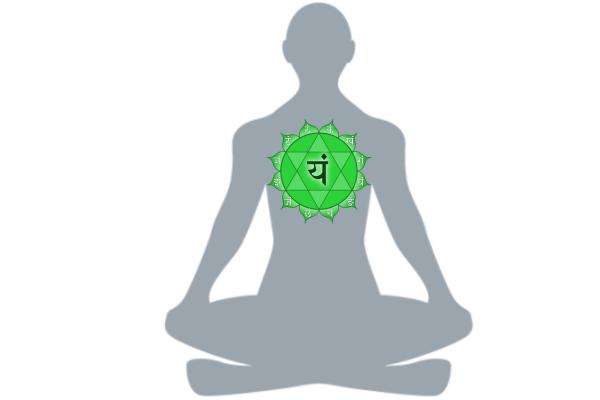
Among the seven chakras that form the subtle architecture of the human energy body, the Heart Chakra—Anahata—stands as the quiet bridge, the mystical midpoint where the earthly meets the spiritual, where survival transforms into connection, and where individuality melts into compassion. If the root grounds you and the crown liberates you, it is the heart that teaches you how to feel, how to trust, and ultimately, how to love beyond the ego’s definitions.
In yogic philosophy, the Heart Chakra is not simply an emotional beacon; it is the energetic blueprint of how we relate—both to ourselves and to the world around us. And in a time where emotional overwhelmedness, relational conflict, and inner fragmentation feel increasingly common, understanding Anahata becomes not just a spiritual luxury but a necessity.
This is the chakra that whispers:
Healing happens when we can hold life with tenderness, not tension.
Relationships thrive when the heart is open, not armored.
Love expands when awareness replaces expectation.
This article dives deeply into the profound influence of the Heart Chakra on emotional healing, relationships, intimacy, forgiveness, boundaries, joy, and self-worth—interweaving psychology, yogic wisdom, subtle-body theory, and intuitive insight.
Understanding Anahata: The Energy of Expansion
The Sanskrit name Anahata means “unstruck sound”—the vibration that exists without collision. This metaphor reveals one of its deepest teachings:
the heart’s authenticity emerges not from reaction, but from resonance.
Where other chakras deal with primal drives or intellect, Anahata introduces qualities like:
- Unconditional acceptance
- Empathy and compassion
- Forgiveness
- Emotional resilience
- Interpersonal harmony
- Love without possession
- Inner softness without fragility
Energetically, it sits at the center of the chest, encompassing the lungs, cardiac plexus, thymus gland, and the arms—symbolizing our ability to give and receive.
Psychologically, the Heart Chakra shapes how we form attachments, repair emotional wounds, navigate conflicts, and create fulfilling partnerships.
Spiritually, it teaches us how to transcend the transactional nature of love and connect from soul to soul.
How the Heart Chakra Shapes Your Emotional Life
1. The Heart as the Keeper of Emotional Memory
While the solar plexus burns with power and passion, it is the heart that stores the long rhythms of emotional memory: childhood tenderness, heartbreak, betrayal, joy, loss, gentleness, longing.
When Anahata is imbalanced, these memories get locked in the body like frozen echoes.
- You may repeat old emotional patterns.
- You may attract partners who match your wounds rather than your hopes.
- You may fear vulnerability, yet crave it.
- You may give too much or too little.
- You may confuse attachment for love.
A balanced Heart Chakra, on the other hand, allows emotional memories to move, transform, and integrate. You no longer drown in old stories—you learn from them.
2. The Heart Chakra and Emotional Regulation
A healthy heart center does not mean you never feel negative emotions. It means your emotions don’t swallow you whole.
When Anahata energy is flowing, you can:
- observe feelings without collapsing into them
- express truth without aggression
- forgive without forgetting yourself
- love without losing boundaries
In modern psychology, this mirrors secure attachment, emotional coherence, and affect regulation—all qualities enhanced by a balanced heart center.

3. The Heart’s Role in Self-Worth and Inner Dialogue
Many people think the heart is about how we love others. But much of its work is internal.
Your self-worth is a direct reflection of your heart’s relationship with you.
When the heart is open, the inner voice softens:
“I am worthy of love.
I am allowed to feel.
I am allowed to rest.
I am enough, even when I change.”
When it’s closed:
“I must earn everything.
I must protect myself.
I can’t trust.
My feelings are too much.”
Healing the Heart Chakra transforms this inner conversation from criticism to compassion.
How the Heart Chakra Shapes Your Relationships
1. The Energetics of Attraction
People often ask: Why do I attract emotionally unavailable partners? Why do I give more than I receive? Why do patterns repeat?
The Heart Chakra plays a major role in this.
Relationships are energetically magnetic:
You attract what mirrors your dominant heart vibration—your wounds, your hopes, your fears, your beliefs about love.
- A closed heart attracts distance or conflict.
- A needy heart attracts chaos or overdependence.
- A balanced heart attracts authenticity and safety.
Healing Anahata shifts your relationship patterns from subconscious repetition to conscious creation.
2. Vulnerability and Emotional Intimacy
Intimacy blooms only in the presence of an open heart. That openness is not weakness—it is clarity, presence, awareness.
A balanced Heart Chakra allows you to:
- express needs without fear
- hear truth without defensiveness
- lean into vulnerability
- remain open during conflict
- receive love without suspicion
- give love without exhaustion
When your heart is imbalanced, you may experience:
- fear of rejection
- emotional shutdown
- jealousy
- clinging or avoidance
- overthinking
- defensiveness
- fear of being seen
Vulnerability becomes terrifying because the heart feels unprotected.
Yoga, breathwork, and mindful movement help bring safety back into the emotional body, making openness possible again.

3. Boundaries: The Unsung Song of the Heart Chakra
Many assume the heart is only about giving. But a strong heart is also capable of courageous boundaries.
Oddly enough, boundaries are a form of love—towards yourself and others.
A balanced Anahata helps you set boundaries that are:
- firm but kind
- clear but compassionate
- confident but not aggressive
Without boundaries, relationships become draining. With excessive boundaries, relationships become distant.
The heart teaches the art of “soft strength”—a state where empathy and self-respect coexist.
4. Forgiveness and Emotional Detachment
Forgiveness is not forgetting; it is releasing the emotional weight that keeps you trapped.
When the heart is blocked, forgiveness feels impossible.
When the heart is open, forgiveness becomes a natural act of liberation.
Detachment is another mature expression of the heart—not indifference, but freedom. It means:
- you love without clinging
- you care without controlling
- you stay open without losing yourself
This kind of detachment elevates relationships from dependency to devotion.
The Heart Chakra and Emotional Healing
1. Healing the Inner Child
So much of heart healing begins with the inner child—the part of you that learned what love means long before you had language for it.
A wounded inner child shows up in adult relationships through:
- fear of abandonment
- people-pleasing
- emotional suppression
- overgiving
- distrust
- craving constant reassurance
Yoga’s gentle, mindful presence provides a safe space for this inner child to re-emerge and be soothed.
As you reconnect with the heart, you often rediscover forgotten qualities:
- playfulness
- innocence
- wonder
- softness
- authenticity
This is the beginning of emotional rebirth.
2. Healing Heartbreak
Heartbreak is not simply emotional—it is energetic.
The chest tightens. The breath shortens. The back curves inward.
Your entire posture becomes a shell around a wounded heart.
But heartbreak also opens spiritual doors.
In yogic philosophy, heartbreak cracks the armor of the ego and allows light to enter.
Healing heartbreak through the Heart Chakra involves:
- breathwork to release emotional density
- chest-opening asanas to restore energy flow
- meditation to break attachment cords
- journaling to integrate lessons
- compassion practices to soften anger
Eventually, heartbreak becomes an initiation into deeper self-awareness.
3. Healing through Connection
Humans are wired for connection. The heart center thrives in the presence of warmth, empathy, and resonance.
Healthy relationships—romantic or otherwise—become portals of heart healing:
- a supportive friend
- a nurturing partner
- a compassionate teacher
- a loving community
- a mindful yoga group
Through them, the heart relearns trust.
This is why in yogic lineages, sangha (community) is considered sacred.
Yoga’s Role in Heart Chakra Expansion
1. Heart-Opening Postures
Postures that expand the chest and upper spine naturally stimulate Anahata:
- Bhujangasana (Cobra Pose)
- Ustrasana (Camel Pose)
- Anahatasana (Melting Heart Pose)
- Setu Bandhasana (Bridge Pose)
- Matsyasana (Fish Pose)
- Chakrasana (Wheel Pose)
These postures are not just physical; they invite emotional release, cleansing, and spaciousness.
2. Breathwork for the Heart Chakra
The breath is the gateway to the heart.
Effective pranayama practices include:
- Anulom Vilom: balances emotional states
- Bhramari: calms the nervous system
- Ujjayi: deepens inner connection
- Hridaya Pranayama: heart-centered breathing for emotional cleansing
Even a few minutes daily can dramatically shift emotional patterns.
3. Meditation and Mantras
Meditation helps dissolve emotional blockages and creates inner clarity.
Mantras like:
“Yam” (heart chakra seed sound)
“Om Mani Padme Hum”
“I am open to giving and receiving love.”
…help activate heart-centered consciousness.

4. The Power of Loving-Kindness (Metta)
Metta meditation expands empathy and softens emotional armor.
It begins with oneself:
“May I be happy.
May I be safe.
May I be peaceful.”
Then extends outward to loved ones, strangers, and even those who hurt us.
This practice purifies the emotional field profoundly.
Signs Your Heart Chakra Is Opening
- You feel lighter emotionally
- Your relationships feel more authentic
- You express feelings more clearly
- You forgive faster
- You stop overthinking love
- You set healthier boundaries
- You feel compassion rather than resentment
- You breathe more deeply
- You feel connected to something greater than yourself
These shifts don’t happen overnight—they happen through consistent inner work.
Conclusion: The Heart as a Pathway to Wholeness
The Heart Chakra is far more than a spiritual concept; it is the silent architect of your emotional life and relational world. It shapes how you love, how you heal, how you connect, and ultimately, how you evolve.
When the heart is open, life flows differently:
- Relationships soften
- Conflicts evolve into conversations
- Vulnerability becomes strength
- Forgiveness becomes freedom
- Love becomes spacious, not suffocating
- And healing becomes not a destination, but a daily unfolding
To heal the heart is to heal the human experience.
To open the heart is to invite life to move through you with grace.
And to understand the heart is to understand the art of living itself.