
Modern life no longer fits into rigid schedules. Work-from-home culture, irregular office hours, travel, family responsibilities, and mental overload have changed how people approach health. In this reality, yoga studios that offer both online and offline (studio) classes are not just adapting — they are leading the future of sustainable wellness.
A hybrid yoga model is not about convenience alone. When designed correctly, it creates better physical alignment, deeper mental discipline, higher consistency, and long-term results than relying on only one format. This article explains why the online + offline yoga model works better, how it supports real transformation, and why students achieve faster progress with it.
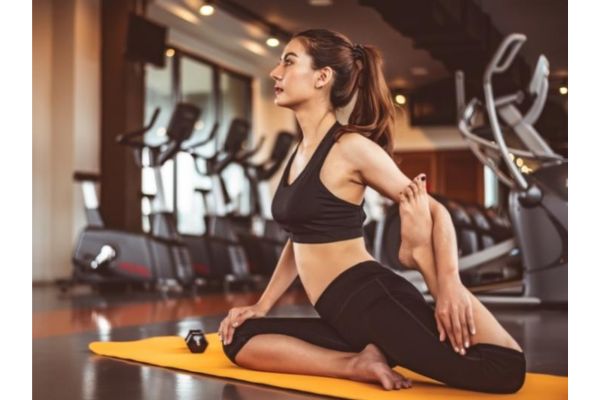
1. Yoga Progress Depends on Consistency, Not Location
The biggest challenge in any wellness journey is not motivation — it is regularity. People often miss classes due to travel, weather, work pressure, or family obligations. When practice becomes inconsistent, results slow down.
A hybrid yoga model solves this by removing the “all-or-nothing” barrier.
- Studio classes ensure discipline and structure
- Online classes prevent long breaks in practice
- Students remain connected even during busy weeks
Instead of restarting yoga every few months, practitioners maintain continuity. From a physiological perspective, consistent movement and breathwork improve neuromuscular coordination, joint lubrication, and nervous system regulation — benefits that disappear when practice is irregular.
Hybrid yoga protects consistency, which protects results.
2. Studio Classes Build Technique, Online Classes Reinforce It
Learning yoga is similar to learning a language. Initial guidance must be precise, but repetition builds fluency.
In offline studio sessions:
- Teachers correct posture and alignment
- Students understand joint safety and muscular engagement
- Breathing errors are addressed early
Once these fundamentals are established, online classes become highly effective reinforcement tools. Practicing at home with correct memory patterns strengthens neural pathways rather than reinforcing mistakes.
This combination reduces the risk of injury while accelerating learning.
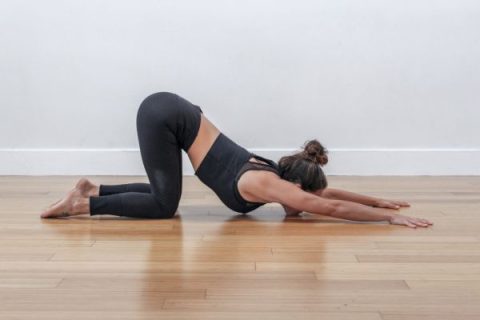
3. Hybrid Yoga Supports Real-Life Schedules
One of the most common reasons people quit yoga is guilt — guilt of missing classes, guilt of falling behind, guilt of “not being disciplined enough.”
Hybrid yoga replaces guilt with flexibility:
- Attend studio sessions when time allows
- Join online classes on hectic days
- Practice from home during travel or illness
Psychologically, this creates self-compassion, which is essential for long-term habit formation. Students stop seeing yoga as a task and start experiencing it as support.
4. Nervous System Benefits Multiply With Hybrid Practice
Yoga works deeply on the autonomic nervous system. However, different environments stimulate different responses.
- Studio classes encourage co-regulation through group energy and guided presence
- Online classes encourage self-regulation and internal awareness
Both are essential skills.
A hybrid model trains the nervous system to remain calm not only in controlled studio environments but also in real-life settings like home, work breaks, or travel spaces. This adaptability leads to better stress management, emotional balance, and resilience.
5. Personalized Attention Meets Daily Accessibility
Offline classes allow teachers to:
- Observe posture changes over time
- Track injuries, limitations, and progress
- Adjust intensity based on seasonal and health needs
Online classes ensure that personalized guidance is not lost between sessions. Teachers can suggest specific practices, recordings, or class types that students can access remotely.
This creates a feedback loop where guidance is continuous rather than fragmented.
6. Hybrid Yoga Encourages Lifestyle Integration
Yoga is not meant to be confined to a mat or a room. The hybrid approach naturally integrates yoga into daily life.
Students begin to:
- Practice short breathwork sessions at home
- Use mobility exercises during work breaks
- Apply mindfulness tools outside class
Because online access reduces dependency on location, yoga becomes a daily lifestyle skill, not just a scheduled activity.
7. Reduced Dropout Rates, Higher Commitment
From a teaching and studio perspective, hybrid yoga dramatically improves student retention.
Why?
- Fewer missed weeks
- Stronger teacher-student connection
- Reduced intimidation for beginners
Beginners often feel self-conscious in studios initially. Online classes help them build confidence. Once comfortable, they participate more openly in offline sessions.
This gradual immersion builds long-term commitment.
8. Health Benefits Improve Through Frequency, Not Intensity
Many people believe yoga results come from intense sessions. In reality, frequency matters more than intensity.
Hybrid yoga allows:
- Gentle online sessions on low-energy days
- Stronger studio sessions when the body feels ready
This balance respects hormonal cycles, stress levels, and recovery needs — especially important for working professionals, women, and aging practitioners.
9. Hybrid Yoga Is Ideal for Modern Health Challenges
Lifestyle disorders such as:
- Back pain
- Digestive issues
- Anxiety
- Poor sleep
- Hormonal imbalance
require regular, adaptable practices, not rigid routines. Hybrid yoga allows teachers to respond to these issues in real time, adjusting recommendations across both formats.

10. The Future of Yoga Is Not Online vs Offline — It Is Integrated
The debate between online and offline yoga misses the point. The most effective approach combines both.
A well-designed hybrid yoga model:
- Preserves authenticity
- Supports modern lifestyles
- Improves consistency
- Delivers faster results
For students, it means freedom without compromise. For studios, it means deeper impact, stronger relationships, and sustainable growth.
Final Reflection
Yoga was always meant to adapt to the practitioner — not the other way around. By offering both online and offline classes, yoga studios honor this timeless principle in a modern form.
Hybrid yoga is not a trend. It is the evolution of mindful practice in a fast-moving world.
For those seeking lasting health, balance, and inner stability, this integrated approach delivers exactly what yoga promises — on and off the mat.