
Completing a yoga teacher training course can feel like reaching the finish line. You have studied asanas, pranayama, anatomy, teaching methodology, sequencing, perhaps meditation and philosophy. You have received your certificate, taken photographs, celebrated with your batchmates—and then a surprisingly difficult question appears:
“What do I do now?”
The transition from yoga student to yoga teacher is not automatic.
A certificate can demonstrate that you have completed a course. It does not, by itself, teach you how to manage a room full of students with different bodies, abilities, expectations, injuries, personalities, and levels of experience.
Your first real lesson as a yoga teacher begins when you stand in front of someone who is depending on you to guide them safely. That is why starting your yoga teaching career requires more than simply searching for a yoga teaching job. It requires you to develop your teaching identity, communication skills, observation ability, practical confidence, and professional approach.
Here is a practical roadmap for beginning your journey after yoga teacher certification.
1. Understand That Certification Is a Beginning, Not an Endpoint
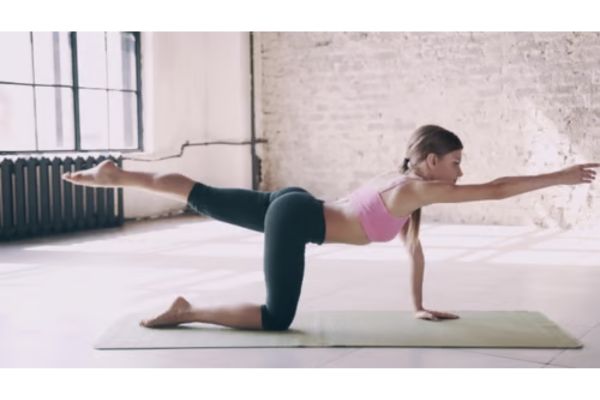
One of the biggest misconceptions among newly certified yoga teachers is that certification means they are now “fully ready” for every type of student.
In reality, yoga teaching is a progressive learning journey. Your certification gives you a foundation. Your teaching experience develops your judgment.
For example, during training, you may learn the traditional alignment of Trikonasana. But your first class might include:
- A student with tight hamstrings
- Someone with limited shoulder mobility
- A person who struggles with balance
- A senior participant who cannot comfortably sit on the floor
- A beginner who is afraid of doing the posture incorrectly
The challenge is no longer knowing how to perform Trikonasana. The challenge is knowing how to teach Trikonasana to five different bodies without making anyone feel inadequate. This is where professional teaching begins.
After certification, continue learning through workshops, supervised teaching, anatomy education, observation, and personal practice. Your goal should not be to collect certificates endlessly but to become increasingly capable of making good decisions for real students.
2. Start Teaching Small Before Teaching Big
Your first class does not need to have 50 students. In fact, starting with a smaller group can be one of the best ways to develop your teaching skills. Consider beginning with:
- Friends or family members
- Small neighbourhood groups
- Apartment communities
- Beginner batches
- Online private sessions
- One-to-one classes
- Corporate wellness sessions
- Community centres
A small group allows you to notice things that are easy to miss in a large class. You can observe whether students are:
- Holding their breath
- Struggling to understand verbal instructions
- Moving too quickly
- Misaligning their joints
- Feeling uncomfortable
- Losing concentration
- Becoming fatigued
These observations teach you something that textbooks cannot: how your instructions are actually being received by another person’s body. Your early classes are not merely a way to earn money. They are your teaching laboratory.

3. Develop Your Own Teaching Style
Two teachers can teach the same asana and create completely different experiences. One may teach through precise anatomical instructions. Another may focus on breath and internal awareness. A third may create a meditative and therapeutic environment.
Your teaching style will gradually emerge from your personality, knowledge, and the population you enjoy teaching. Ask yourself:
Who do I genuinely want to teach?
Perhaps you enjoy working with:
- Beginners
- Children
- Women
- Seniors
- Corporate professionals
- Athletes
- People dealing with stress
- Individuals seeking therapeutic yoga
- Students interested in traditional yoga philosophy
You do not need to decide your lifelong niche immediately. However, identifying your areas of interest can help you become more focused. A teacher known for something specific is often easier to remember than a teacher who simply says, “I teach yoga for everyone.”
Your specialization should be supported by appropriate knowledge and training. If you want to teach therapeutic yoga, for example, understanding anatomy, contraindications, and scope of practice becomes especially important.
4. Learn to Teach, Not Just Demonstrate
A common challenge for new yoga teachers is spending too much time demonstrating. When you are teaching, your role is not to perform the most beautiful version of an asana.
Your role is to help students understand their own movement. Instead of saying:
“Look at me and copy this.”
Effective teaching often involves giving students clear sensory and functional instructions.
For example, rather than simply demonstrating a balancing posture, you might guide students to notice:
- The pressure distribution through the standing foot
- The engagement of the toes
- The position of the pelvis
- The relationship between the gaze and balance
- The quality of the breath
- The response of the nervous system to instability
This transforms a posture from a “shape to copy” into an experience to understand. A good teacher gradually makes students less dependent on the teacher.
5. Practice Giving Clear Instructions
A yoga teacher can know anatomy extremely well and still struggle to teach effectively. The difference often comes down to communication. Imagine telling a beginner:
“Activate your core, externally rotate the shoulder, stabilize the scapula, engage the pelvic floor, and maintain neutral spinal alignment.”
Technically, some of these instructions may be relevant. But for a beginner, this may create cognitive overload. Instead, you could break the movement into manageable steps.
One instruction.
One action.
One breath.
Then observe. Your voice should guide rather than overwhelm. Develop the ability to explain the same concept in multiple ways. If one student does not understand your instruction, changing the wording may work better than repeating the same sentence louder. Teaching yoga is partly the art of translating complex knowledge into language that the student’s body can understand.
6. Learn to Observe Before You Correct
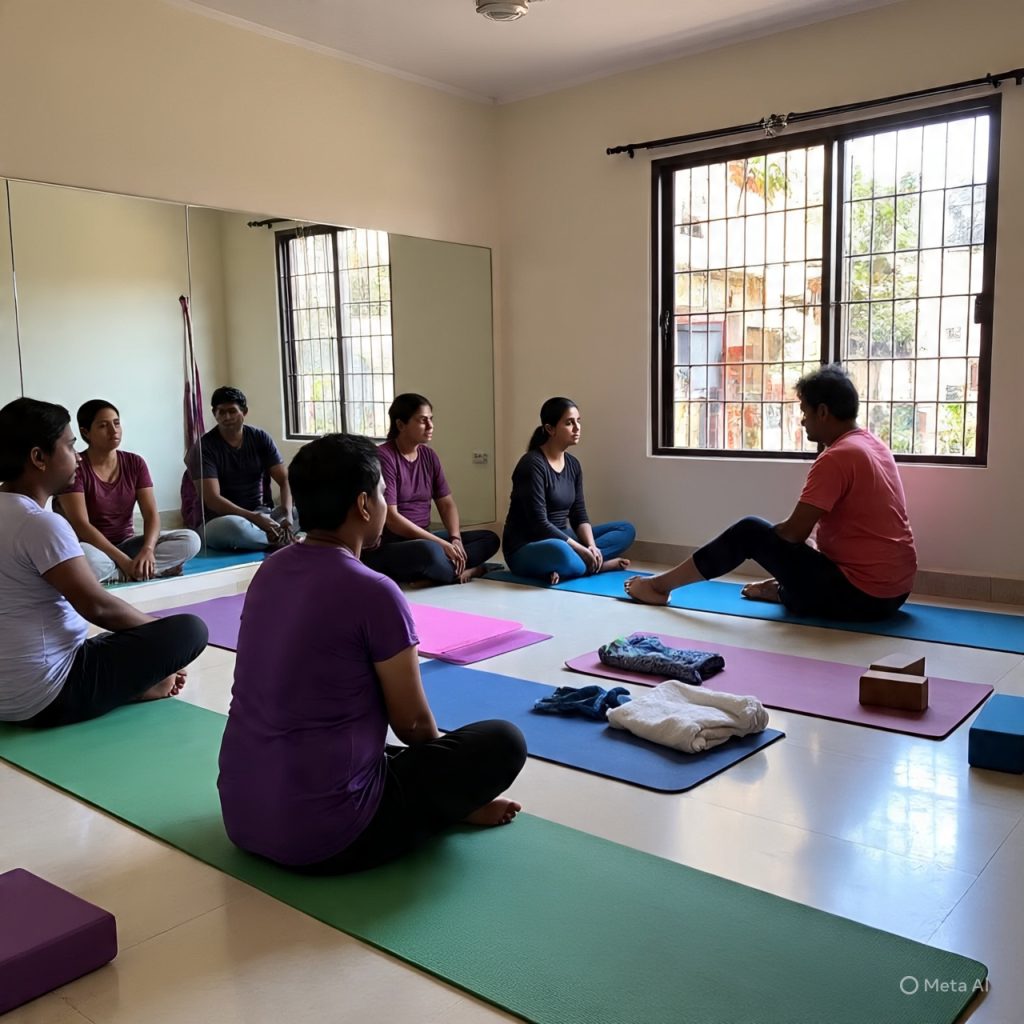
New teachers often feel that they must constantly correct students. But not every difference from your demonstration is a mistake. Bodies are different. Mobility is different. Proportions are different. Previous injuries are different.
Instead of asking:
“Does this student look exactly like the textbook?”
Ask:
“Is this student moving safely and appropriately for their current ability?”
This shift is fundamental. Observation should come before intervention.
Notice:
- Is the student experiencing pain?
- Is their breathing becoming strained?
- Are they compensating somewhere else?
- Are they able to maintain control?
- Are they confused about the movement?
- Is the variation intentional or accidental?
The goal of a correction is not to make every student look identical. The goal is to help the student develop better awareness and safer movement.
7. Create Your First Professional Profile
Once you are ready to teach, make it easy for people to understand who you are.
Your professional profile can include:
- Your yoga certification
- Your teaching experience
- Areas of specialization
- Types of students you work with
- Online or offline availability
- Location
- Class format
- Contact details
You do not necessarily need an expensive website in the beginning. A professional social media profile, a simple digital portfolio, or a well-designed introduction can be enough to establish credibility. Share useful content rather than only promotional posts.
For example, instead of repeatedly posting:
“Join my yoga classes!”
You could share:
- A short breathing practice
- Beginner-friendly yoga tips
- Common alignment mistakes
- Educational posts about mobility
- Safe modifications
- Explanations of why a particular practice is used
When people consistently receive value from your content, they begin to see you as an educator rather than simply someone selling classes.
8. Find Your First Students Through Multiple Channels
Your first students may not come from a large online following. They may come from your immediate network.
Consider reaching out to:
- Former classmates
- Friends
- Apartment communities
- Local wellness groups
- Schools
- Fitness centres
- Yoga studios
- Corporate HR teams
- Community organizations
You can also explore online platforms and professional networks. Another powerful strategy is collaboration. A physiotherapist may know people looking for movement-based wellness support. A fitness trainer may have clients interested in flexibility or recovery. A wellness centre may need a yoga instructor for group sessions.
However, always remain within your professional scope. Yoga teachers should not diagnose medical conditions or replace qualified healthcare professionals.
9. Treat Your First Classes as Feedback, Not Judgment
Your first few classes may not be perfect. You may speak too quickly. Your sequence may be too long. You may realize that an instruction that sounded clear in your head confused everyone. You may finish class and realize you forgot to leave enough time for relaxation. That is normal. After each class, ask yourself:
What worked?
Where did students struggle?
Which instructions were unclear?
Was the pace appropriate?
Did I leave enough time for breathing and relaxation?
Did the class achieve its intended purpose?
This process creates a feedback loop. Teaching → observing → reflecting → improving → teaching again.
That loop is one of the fastest ways to grow as a yoga teacher.
10. Learn the Business Side of Yoga Teaching
Being a good yoga teacher and running a sustainable yoga career are two different skill sets.
If you want yoga to become your profession, you need to understand:
- How to price your classes
- How to structure packages
- How to communicate policies
- How to manage cancellations
- How to maintain attendance records
- How to collect payments
- How to market ethically
- How to retain students
You also need to decide whether you want to work as:
A studio instructor
A freelance teacher
A private yoga instructor
An online yoga teacher
A corporate wellness instructor
A yoga entrepreneur
Or a combination of these.
Many teachers begin with multiple income streams before gradually specializing. For example, a new teacher might conduct weekend group classes, teach private sessions during weekdays, and create online educational content. The key is to build a career model that is financially sustainable without compromising teaching quality.
11. Don’t Chase Advanced Poses to Prove Your Expertise
A new teacher may feel pressure to demonstrate increasingly difficult postures. But students rarely need a teacher who can simply perform the most advanced asana in the room.
They need someone who can:
- Make them feel safe
- Understand their limitations
- Explain clearly
- Adapt intelligently
- Observe carefully
- Encourage without forcing
- Create consistency
The ability to teach a complete beginner how to breathe comfortably, move with awareness, and develop confidence may require more teaching skill than demonstrating an advanced inversion. Your expertise is not measured only by what you can do.
It is also measured by what you can help someone else understand.

12. Continue Your Own Practice
Perhaps the most important step after certification is to remain a student. Continue practicing. Continue observing.
Continue questioning. Continue learning. Your personal practice gives you an opportunity to experience changes in your own body and mind. It helps you understand that the same posture can feel different from one day to another. As you develop as a teacher, your practice may also evolve.
You may become more interested in breathwork, meditation, anatomy, yoga philosophy, therapeutic applications, or specialised populations. The best teachers do not stop learning when they receive a certificate.
They become better because they remain curious.
Your Yoga Teaching Career Starts With Your First Real Student
Starting to teach yoga after certification can feel intimidating because certification gives you knowledge, but your first real students give you perspective.
You will learn that teaching is not about delivering a perfect sequence. It is about responding to the people in front of you.
Some days, your students may need challenge. Other days, they may need restoration. One student may need a modification. Another may need encouragement.
Someone else may simply need permission to slow down. That is why becoming a yoga teacher is a journey that continues long after the certificate is framed on the wall. Your certification may open the door.
But your ability to observe, adapt, communicate, learn, and genuinely serve your students is what builds a lasting yoga teaching career.
So, if you have recently completed your yoga teacher training, do not wait until you feel like you know everything.
Start small.
Teach responsibly.
Reflect after every class.
Keep learning.
And remember: your first class is not the final test of whether you are a good yoga teacher. It is the first chapter of becoming one.
If you approach teaching with humility, discipline, and curiosity, your certification will become more than a qualification—it will become the foundation of a meaningful professional journey in yoga.