
Most of us step on the yoga mat thinking we’re here to stretch, strengthen, or tone.
But the longer we practice, the more we realize — yoga isn’t something that happens to the body; it happens through it.
The body is only the doorway. What truly transforms us lies beyond the visible — in the subtle layers of energy, awareness, emotion, and spirit that shape who we are.
In yogic philosophy, these layers are known as the Pancha Koshas — the five sheaths or dimensions of being.
Understanding them doesn’t just deepen your yoga; it completely redefines it.
So, the real question is:
???? Is your practice only physical — or is it energetic, emotional, mental, and spiritual too?
Let’s journey inward, layer by layer. ????
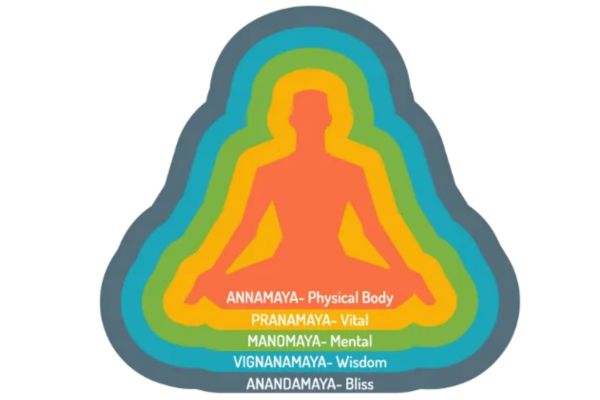
???? 1. Annamaya Kosha — The Physical Body: “The Temple You Live In”
This is the most visible sheath — your muscles, bones, organs, joints, and skin. It is literally made of anna (food). Whatever you eat, breathe, or expose your senses to becomes part of this sheath.
When you start yoga, this is usually where the awareness begins.
You notice:
- “My hamstrings are tight.”
- “My back feels more open.”
- “My posture is improving.”
But the deeper understanding of Annamaya Kosha lies in how you inhabit your body.
A mindful physical practice transforms your asanas from mechanical movement into living meditation.
When you start observing your body without judgment, something magical happens — you begin to listen.
???? Reflection:
Every asana becomes a conversation between your body and your consciousness.
You stop forcing and start flowing.
You realize that your body is not an obstacle — it’s your first teacher.
????♀️ Practice Tip:
Try doing one asana with full sensory awareness.
Feel how your feet press the mat, how the breath moves, how your heartbeat changes.
That presence is the doorway to the next layer — Pranamaya Kosha.
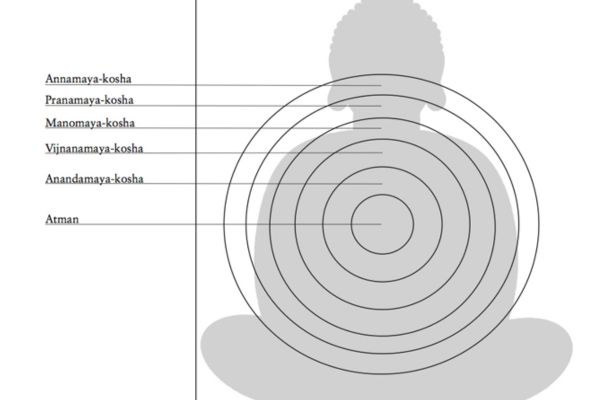
????️ 2. Pranamaya Kosha — The Energy Body: “Where Life Truly Moves”
If the first sheath is the body, the second is the current that animates it — Prana, the life force.
When you feel fatigued despite sleeping well, or anxious despite everything being fine — it’s not your body; it’s your Pranamaya Kosha asking for attention.
This sheath governs breath, energy flow, and vitality. Every time you inhale deeply, pause consciously, and exhale slowly, you are shaping this energetic layer.
✨ Yogic Insight:
Prana moves through subtle energy channels called Nadis.
When Nadis are blocked (due to stress, tension, or emotional clutter), the energy stagnates — leading to dis-ease or restlessness.
That’s why pranayama (breath control) isn’t just “breathing exercises.” It’s energy management.
???? Reflection:
When you breathe consciously, you’re not just inhaling oxygen — you’re awakening life force.
Each breath becomes a reminder that energy flows where awareness goes.
????♂️ Practice Tip:
Start your session with Nadi Shodhana (Alternate Nostril Breathing).
It cleanses your energy pathways and centers your mind before asana.
When you move after that, your practice becomes energetic, not merely physical.

???? 3. Manomaya Kosha — The Mental Body: “The Space of Thoughts and Emotions”
Ever noticed how your thoughts affect your practice?
On days you’re peaceful, your balance is steady. On stressful days, even Tadasana feels shaky.
That’s the influence of the Manomaya Kosha — the mind sheath. It governs thoughts, emotions, memories, and reactions.
In modern life, this sheath is often overstimulated. We’re constantly scrolling, comparing, reacting — and that mental noise follows us onto the mat.
But yoga offers a quiet rebellion — to pause, breathe, and observe.
When you witness your emotions rather than getting caught in them, the Manomaya Kosha begins to harmonize.
Gradually, practice shifts from “How does my body look?” to “How does my mind feel?”
???? Reflection:
Yoga isn’t about escaping thoughts — it’s about changing your relationship with them.
The mind becomes a servant, not the master.
????♀️ Practice Tip:
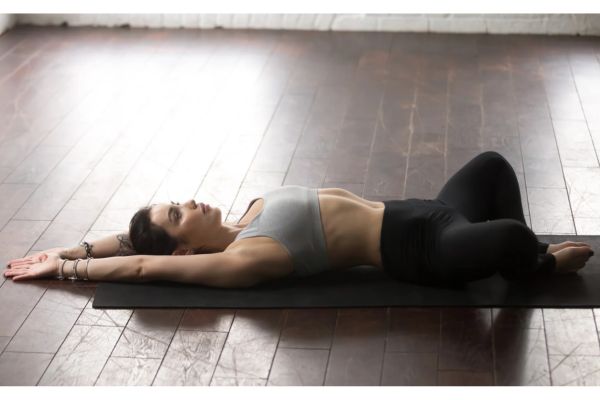
End your asana practice with Yoga Nidra or Mindful Savasana.
Let the mind digest what the body and energy have experienced.
This nourishes emotional clarity and inner calm.

???? 4. Vijnanamaya Kosha — The Wisdom Body: “The Inner Teacher Within”
Once the body, breath, and mind harmonize, you start hearing something quieter — intuition, inner knowing, clarity beyond logic.
That’s the Vijnanamaya Kosha — the sheath of wisdom and discernment (Viveka).
It’s not intellectual knowledge. It’s inner intelligence. The ability to make decisions from a place of balance and awareness rather than fear or impulse.
This layer awakens when we start asking questions like:
- “Why am I doing this posture?”
- “What does balance feel like, not look like?”
- “What energy am I carrying into my practice today?”
✨ Yogic Insight:
Every time you pause and listen to your intuition — whether to rest, modify, or deepen a pose — you’re honoring this sheath.
???? Reflection:
As Vijnanamaya Kosha strengthens, your yoga stops being an external discipline and becomes an internal dialogue.
You no longer seek teachers outside — you recognize the teacher within.
????♂️ Practice Tip:
During your next session, move with awareness instead of ambition.
Notice when the body whispers “enough” and when the spirit says “expand.”
This subtle discernment is pure yoga intelligence.

???? 5. Anandamaya Kosha — The Bliss Body: “The Essence of Who You Truly Are”
The fifth sheath is the most refined — Anandamaya Kosha, the sheath of bliss, joy, and pure being.
This is not the fleeting happiness that depends on achievements or outcomes.
It’s a deep, silent contentment that arises when body, energy, mind, and wisdom align perfectly.
It’s the stillness after a soulful practice — when you lie in Savasana and feel tears of peace rolling down your cheeks without reason.
That’s Anandamaya — the remembrance of your true nature.
✨ Yogic Insight:
You cannot “achieve” bliss — you can only reveal it, by peeling off the denser layers.
???? Reflection:
When you move through life anchored in this sheath, challenges still come, but they no longer shake your foundation.
You operate from serenity, not survival.
????♀️ Practice Tip:
Dedicate the last few minutes of your practice to silence — no movement, no goal.
Just be.
This is where the practice transcends into meditation, and the doer dissolves into the being.
???? Integrating the 5 Koshas in Daily Practice
True yoga isn’t about mastering poses — it’s about mastering awareness across all these layers.
Here’s how you can bring the five koshas into your daily sadhana (practice):
| Kosha | Focus | Daily Practice |
|---|---|---|
| Annamaya | Physical awareness | Balanced asana, mindful eating, body gratitude |
| Pranamaya | Energy regulation | Pranayama, breath-led movement, outdoor walks |
| Manomaya | Emotional balance | Meditation, journaling, mindful communication |
| Vijnanamaya | Inner wisdom | Intention setting, self-reflection, silence |
| Anandamaya | Spiritual connection | Gratitude, meditation, seva (selfless service) |
When you practice yoga through this multi-layered lens, even a 10-minute session becomes sacred.
✨ The Shift: From Doing Yoga to Becoming Yoga
The biggest transformation happens when yoga stops being an activity and becomes a state of being.
- You start with the body (Annamaya).
- You connect with the breath (Pranamaya).
- You observe the mind (Manomaya).
- You listen to intuition (Vijnanamaya).
- You rest in bliss (Anandamaya).
Each sheath refines the next, leading you toward wholeness.
And that’s when you realize — your practice was never just physical or energetic. It was always spiritual in disguise.
???? Closing Reflection
The next time you unroll your mat, ask yourself:
“Am I only moving my body — or am I moving energy, awareness, and consciousness?”
Because when all five koshas harmonize, yoga becomes what it was always meant to be —
A journey from movement to stillness, from effort to ease, from body to bliss. ????