
You watch a yoga teacher demonstrate a pose. Your body follows the same shape. Your knees point in the right direction, your spine looks straight, your hands are positioned correctly—and yet, something does not feel right.
You may feel discomfort. You may struggle to breathe. One side may feel significantly tighter than the other. Or perhaps the pose simply feels impossible despite doing everything “correctly.”
So, are you doing the yoga pose wrong?
Not necessarily.
This is where yoga alignment becomes much more interesting than simply copying the shape of an asana.
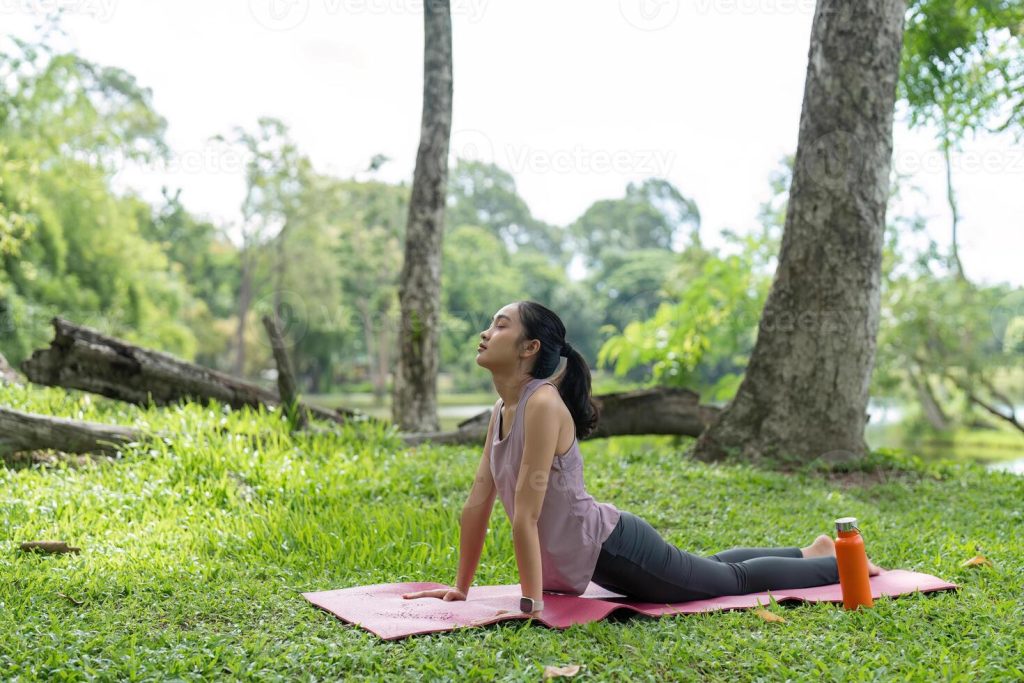
A yoga pose can look technically correct from the outside and still be unsuitable for your particular body. Your bone structure, limb proportions, joint mobility, muscular strength, previous injuries, balance, and even the way you naturally move can influence how an asana should be performed. This does not mean alignment is unimportant. Quite the opposite.
It means that good yoga alignment is not about forcing every body into the same shape. It is about finding an appropriate relationship between the body, the pose, breathing, stability and intention of the practice.
What Does Yoga Alignment Actually Mean?
When people hear the word “alignment,” they often imagine a checklist:
- Keep the knees here.
- Keep the spine straight.
- Point the toes this way.
- Place the hands exactly there.
- Make both sides symmetrical.
These instructions can be useful, particularly when learning an asana. However, they can become limiting when they are treated as absolute rules.
Yoga alignment is better understood as the way different parts of your body relate to one another while you perform a movement or maintain a posture. It includes more than what can be seen externally. A teacher may observe your joint positions, but also needs to consider:
- How stable the posture is
- Whether you can breathe comfortably
- Where you feel muscular effort
- Whether you are compensating elsewhere
- Whether the movement matches your available mobility
- Whether you can maintain control
- Whether the pose is appropriate for your current physical capacity
Two people can therefore perform the same asana with slightly different shapes while both demonstrating appropriate alignment. And that is one of the most important concepts in learning yoga safely.
Why the “Perfect” Yoga Pose Doesn’t Look the Same on Everyone
Imagine two people standing in Tadasana. One person has relatively long legs and a short torso. Another has a longer torso and shorter legs. Now place both into Uttanasana. Should their bodies look identical? Probably not.
Their proportions can influence how far they can fold, how their spine appears, how their hands reach the floor and how much movement occurs at the hips. The same principle applies to many yoga postures. Your skeleton places boundaries on movement. Muscles can become stronger. Mobility can improve. Coordination can develop. But the fundamental structure of your bones and joints does not simply change because you want to achieve a particular visual shape.
This is why copying the appearance of another person’s asana can sometimes create unnecessary strain. The goal of yoga alignment should not be:
“How can I make my body look exactly like the teacher’s?”
A better question is:
“How can I organize my body appropriately for the purpose of this pose?”
When Correct Alignment Becomes the Wrong Alignment
Here’s where things get interesting.
Suppose a yoga teacher demonstrates a deep forward fold with the palms comfortably touching the floor. A student tries to imitate it. The student cannot reach the floor without rounding excessively through the spine. Instead of reducing the range of movement, they force themselves deeper because they believe their hands must touch the mat. From the outside, they are trying to achieve the “correct” pose. But internally, they may be creating unnecessary compensation.
This illustrates an important distinction:
A visual target is not necessarily a movement requirement. A yoga pose should be adapted to the person performing it—not the other way around. Using a block, bending the knees, reducing the range of motion or changing the position of the feet can sometimes produce a more appropriate practice than forcing the body into an idealized shape.
That is not “doing less yoga.” It is applying yoga alignment intelligently.
Your Anatomy Can Change How a Pose Feels
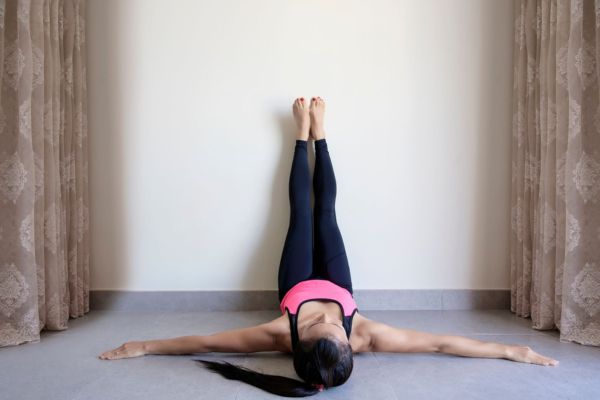
One of the reasons yoga alignment cannot always be standardized is that everyone’s anatomy is different. Consider the hip joint.
The shape and orientation of the hip socket, the femur, surrounding soft tissues and available range of motion can influence how a person experiences hip-opening postures. Two people may enter the same position. One experiences a comfortable stretch. The other feels a strong restriction much earlier. It does not automatically mean the second person is less flexible or doing the pose incorrectly. Their anatomical structure may simply create a different available range.
This is particularly important in poses involving significant hip rotation, such as Padmasana, Ardha Matsyendrasana or certain variations of hip-opening postures. Trying to force the knees or hips into the same visual position as someone else can be counterproductive. Instead, yoga practice should respect the body’s available movement while gradually developing appropriate mobility and control.
The Same Pose Can Also Require Different Levels of Effort
Alignment is not only about flexibility. It is also about strength and stability.
Take Vrikshasana, or Tree Pose. A beginner may need a wall or chair for support. An experienced practitioner may be able to balance without external assistance. Both can be practicing the same asana. But their bodies are working under different demands. Balance requires communication between the nervous system, vision, vestibular system, muscles and joints. The feet and ankles continuously make small adjustments to keep the body stable.
If a beginner removes support too early simply because they believe “advanced yoga” means never using assistance, they may compensate by gripping the toes, locking the knee or excessively shifting the pelvis. In this situation, using support may actually improve yoga alignment.
The prop is not reducing the quality of the practice. It is helping the practitioner develop control.
Why “Deeper” Does Not Always Mean “Better”
One of the most persistent misconceptions in yoga is that progressing means going deeper into a posture. A deeper forward fold. A deeper hip opening. A deeper backbend. A deeper twist.
But depth is only one variable. A person who moves further into a posture while losing control, breathing poorly or compensating through another part of the body may not necessarily be practicing better alignment. Meanwhile, another person may use a smaller range of motion but demonstrate excellent control and awareness. This is why yoga alignment should not be judged purely by how far someone can move.
A more useful question is:
Can the practitioner maintain appropriate control while achieving the intended purpose of the posture?
That changes the entire approach to yoga practice.
Why Your “Tight Hamstrings” May Not Be the Whole Story
Imagine you cannot comfortably touch your toes. The obvious conclusion might be:
“My hamstrings are tight.”
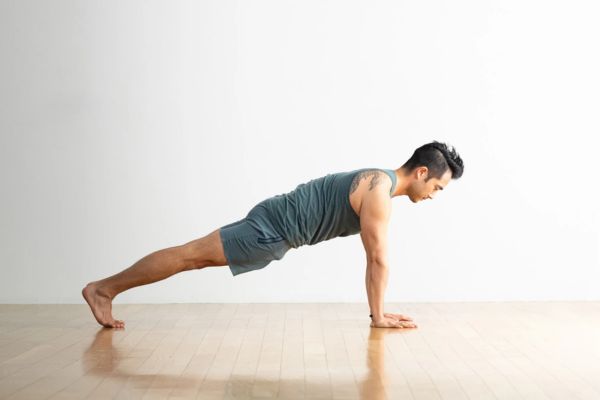
But movement is rarely that simple. A forward fold involves multiple joints and tissues, including the hips, pelvis and spine. The nervous system also influences how far you are willing and able to move. Your limitation may therefore not be explained by one muscle alone.
This is why repeatedly forcing the same stretch may not solve the underlying movement limitation. Instead, a skilled yoga teacher observes the entire movement pattern. Where does the restriction appear? What happens to the spine? Can the pelvis move freely? Is there unnecessary tension? Does bending the knees change the experience? Does using a prop improve control?
These questions lead to much more useful yoga alignment than simply saying, “Keep your legs straight and touch your toes.”
Why Your Right Side May Never Look Exactly Like Your Left
Have you ever noticed that a pose feels completely different on your two sides? This is extremely common. Most people have some degree of asymmetry in strength, mobility, coordination or habitual movement.
For example, you may find that:
- One hip rotates more comfortably.
- One shoulder has greater range of motion.
- One ankle feels more restricted.
- One side feels stronger during balancing poses.
- One side requires more muscular effort.
This does not necessarily indicate a problem.
Instead of forcing both sides to look identical, yoga can be used to observe these differences and gradually develop better awareness and control. Good yoga alignment does not always mean perfect symmetry. Sometimes it means understanding your asymmetry and working appropriately within it.
Props Can Improve Yoga Alignment—Not Make You “Less Advanced”
Blocks, straps, bolsters, walls and chairs are sometimes viewed as tools for beginners. That perception needs to change. A yoga prop can modify the relationship between your body and the environment.
For example, placing a block under the hands during a forward fold can reduce the distance between the floor and the practitioner. This may allow the person to maintain better control rather than reaching excessively. A wall can provide valuable feedback during balance practice. A strap can help a practitioner explore a movement without forcing the shoulders into an uncomfortable position.
The purpose of a prop is not necessarily to make the pose easier. Sometimes its purpose is to make the movement more precise, controlled or accessible.
What Should a Yoga Teacher Actually Look For?
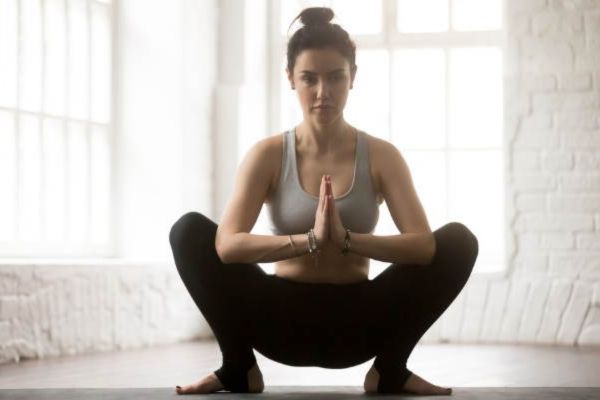
A skilled yoga teacher should look beyond whether a student’s pose resembles the textbook demonstration. Instead, they can observe several questions:
Can the student breathe naturally?
If the student is holding their breath to maintain the posture, the pose may need modification.
Where is the effort coming from?
Some muscular effort is expected. But excessive gripping or tension may indicate compensation.
Is the student controlling the movement?
A posture performed through momentum or forced range may require adjustment.
Is there unnecessary discomfort?
Not every sensation means something is wrong, but sharp, sudden or concerning pain should not simply be ignored in the name of alignment.
Does the variation suit the student’s current ability?
The same pose can have different starting points for different practitioners. This is where the difference between demonstrating yoga and teaching yoga becomes clear. A demonstration shows one possibility. Teaching requires understanding the person in front of you.
So, What Is “Good” Yoga Alignment?
Good yoga alignment is not about making every practitioner look identical. It is about creating an appropriate relationship between:
Structure + movement + stability + breathing + awareness + intention.
Sometimes that means going deeper. Sometimes it means reducing the range. Sometimes it means bending the knees. Sometimes it means using a block. Sometimes it means staying with a simpler variation for several weeks. And sometimes it means recognizing that a particular variation is not appropriate for you right now.
The goal isn’t to make your body obey the pose. The goal is to make the pose work appropriately for your body.
Stop Chasing the Shape. Start Understanding the Body.

Yoga becomes far more meaningful when you stop treating the final shape as the only measure of success. The person who touches the floor is not automatically practicing better than the person using two blocks. The person holding a deep backbend is not automatically more advanced than someone working within a smaller range. And the person who looks perfectly aligned in a photograph may not necessarily be experiencing the posture in the way you assume.
Yoga alignment is personal. The most effective practice considers anatomy, mobility, strength, balance, breathing, experience and individual needs rather than forcing everyone toward a single visual standard. That is why learning yoga from a knowledgeable teacher is about much more than memorizing poses.
It is about learning why the body moves the way it does, when to progress, when to modify, and how to recognize the difference between productive challenge and unnecessary strain. Because the best yoga pose isn’t necessarily the one that looks the most perfect.
It is the one that allows your body to practice with awareness, control and purpose.