
If you’ve ever found yourself trembling in Chair Pose, wobbling in Warrior III, or feeling your entire body vibrate during Plank, you’re certainly not alone. Body shaking during yoga is one of the most common experiences among practitioners of all levels. Yet, despite how frequently it happens, many people become concerned when they notice it for the first time.
Some assume that shaking means they are weak, out of shape, or performing the pose incorrectly. Others worry that it may indicate an injury or a problem with their practice. In reality, mild to moderate shaking during yoga is often a natural response to physical effort, muscular engagement, nervous system activity, and the body’s ongoing adaptation process.
Yoga asks the body to do much more than simply move. It requires balance, stability, flexibility, strength, concentration, and breath awareness all at once. When these elements come together in a challenging posture, the body may respond with trembling as it works to meet those demands.
Understanding why shaking occurs can help practitioners approach their yoga journey with greater confidence and less frustration. Instead of seeing it as a sign of failure, it can be viewed as an indication that the body is learning, adapting, and growing stronger.
Shaking During Yoga Is Usually Normal
One of the most reassuring things to know is that occasional shaking during yoga is generally normal. In fact, even experienced practitioners who have been practicing for years can experience trembling in certain poses, particularly when trying a new variation or holding a posture for an extended period.
The body constantly adjusts to physical challenges. Whenever a pose demands more strength, stability, or flexibility than the body is accustomed to, the muscles and nervous system must work harder to maintain control. This increased effort can sometimes appear as visible shaking.
Rather than focusing on the shaking itself, it is helpful to pay attention to how the body feels overall. If the sensation is not accompanied by pain, dizziness, or discomfort, it is often simply part of the body’s natural response to challenge.
Many yoga teachers even view occasional shaking as a sign that practitioners are working at an appropriate level of intensity rather than remaining entirely within their comfort zone.
Your Muscles Are Working Harder Than You Think
One of the most common reasons for shaking is muscular fatigue. Although yoga may appear calm and graceful from the outside, many poses require significant strength and endurance behind the scenes.
When you hold a posture, the muscles remain engaged continuously instead of contracting and relaxing repeatedly as they might during walking or other daily movements. Over time, this sustained effort causes fatigue to develop within the muscle fibers.
As the muscles become tired, maintaining a perfectly steady contraction becomes more difficult. The result is often a trembling sensation that can be seen or felt throughout the body. This is especially common during poses that require prolonged holds.
You may notice shaking during:
- Chair Pose
- Boat Pose
- Plank Pose
- Side Plank
- Warrior III
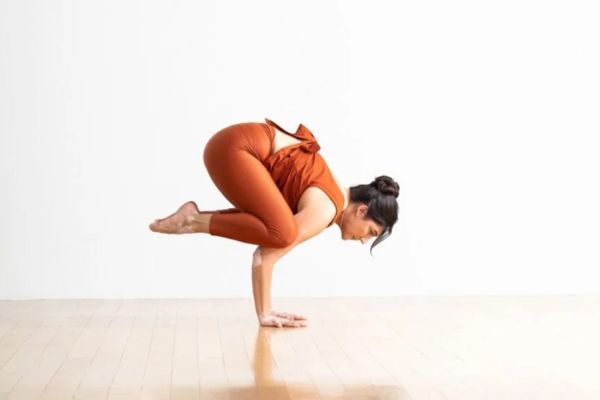
- Crow Pose
In many cases, this type of shaking is simply evidence that the muscles are being challenged and strengthened through practice.
The Hidden Role of Stabilizing Muscles
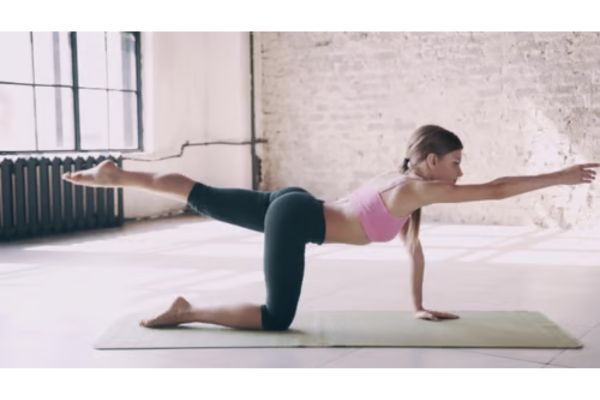
When people think about strength, they often focus on large muscle groups such as the quadriceps, glutes, or shoulders. However, yoga relies heavily on smaller stabilizing muscles that help maintain balance and alignment.
These stabilizers are responsible for making countless tiny adjustments throughout a pose. They work continuously to keep joints supported and prevent unwanted movement. Because many of these muscles are not heavily used during everyday activities, they may fatigue relatively quickly when challenged.
Balancing postures are particularly demanding for stabilizing muscles. Even though a pose may appear still from the outside, the body is constantly making subtle corrections to maintain equilibrium.
As these smaller muscles become stronger through regular practice, balance improves and shaking often becomes less noticeable. This is one reason why poses that initially feel unstable gradually become more comfortable over time.
Your Nervous System Is Learning New Skills
Yoga is not only a physical practice—it is also a neurological one. Every time you attempt a new pose, the brain must learn how to coordinate multiple muscles efficiently and precisely.
Think about learning any new skill. Whether it’s riding a bicycle, playing an instrument, or learning a dance routine, the body often feels awkward and unsteady in the beginning. The same principle applies to yoga.
When the nervous system is still figuring out how to organize movement patterns, communication between the brain and muscles may not be perfectly smooth. This can result in shaking, wobbling, or momentary instability.
Over time, the brain becomes more efficient at sending signals to the appropriate muscles. Movements become smoother, balance improves, and poses that once felt difficult begin to feel natural.
For this reason, shaking is often not a sign of weakness but rather evidence that the nervous system is actively learning and adapting.
Deep Stretching Can Trigger Trembling
Strength is not the only factor that can cause shaking. Many practitioners notice trembling during deep stretches, particularly in hip openers and flexibility-focused postures.
When muscles are stretched beyond their usual range of motion, sensory receptors within the muscles send information to the nervous system regarding tension and length. If the stretch feels intense, the body may respond with small contractions as a protective mechanism.
These contractions can create a trembling sensation that may be noticeable in the legs, hips, or surrounding muscles. While it can feel unusual, it is often simply the body’s way of maintaining safety while adapting to increased flexibility.
Common poses where stretching-related shaking may occur include:
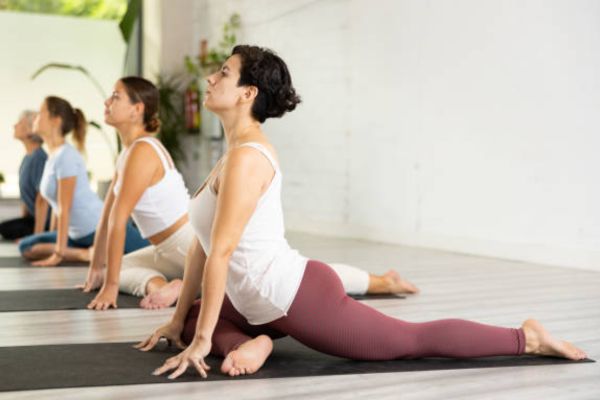
- Pigeon Pose
- Lizard Pose
- Deep Forward Folds
- Butterfly Pose
- Wide-Legged Fold
- Low Lunge Variations
Gentle breathing and patience usually help the body gradually relax into these postures.
Breath Holding Can Make Shaking Worse
Many people unknowingly hold their breath when a pose becomes difficult. This is a natural reaction, but it can actually increase muscular tension and make shaking more pronounced.
When breathing becomes restricted, oxygen delivery becomes less efficient and muscles may fatigue more quickly. The body begins working harder than necessary, creating additional strain and instability.
One of the fundamental principles of yoga is maintaining steady and conscious breathing throughout the practice. Smooth breathing helps regulate the nervous system, improve focus, and support muscular endurance.
If you notice shaking during a pose, bringing awareness back to your breath can often help. Instead of forcing the posture, try slowing the breath and allowing the body to relax into the challenge.
Many practitioners find that controlled breathing significantly reduces unnecessary tension and improves overall stability.
Stress and Fatigue Affect Yoga Performance
The body you bring to the mat changes from day to day. Factors such as sleep quality, stress levels, hydration, and nutrition all influence how your body performs during practice.
A pose that feels effortless one day may feel surprisingly challenging the next. This variation is completely normal and does not necessarily indicate a change in fitness level.
High stress levels can increase nervous system activation, making muscles more tense and reactive. Similarly, inadequate sleep or dehydration can reduce muscular endurance and contribute to earlier fatigue.
When shaking appears unexpectedly, it may be helpful to consider external factors such as:
- Lack of sleep
- Mental stress
- Dehydration
- Poor recovery
- Physical exhaustion
- Inadequate nutrition
Sometimes the solution is not to push harder but to give the body the rest and support it needs.
Is Shaking a Sign of Progress?
In many situations, yes. While shaking should not be viewed as the ultimate measure of an effective yoga practice, it often indicates that the body is being challenged in a meaningful way.
Growth rarely occurs entirely within the comfort zone. As muscles become stronger, stabilizers become more active, and the nervous system develops greater coordination, temporary shaking may occur as part of the adaptation process.
This does not mean every pose must result in trembling. However, occasional shaking can simply be evidence that the body is working, learning, and expanding its capabilities.
Instead of becoming frustrated by the experience, practitioners can view it as feedback from the body. It is a reminder that progress is taking place, even if it does not always feel graceful.

When Should You Be Concerned?
Although mild shaking is usually harmless, there are situations where it may warrant attention. The key difference is whether the shaking is accompanied by symptoms that suggest strain, injury, or a medical issue.
Consider stopping the pose and seeking professional guidance if shaking occurs alongside:
- Sharp or sudden pain
- Joint instability
- Numbness or tingling
- Dizziness
- Difficulty breathing
- Persistent tremors outside practice
- Loss of control over movement
Yoga should challenge the body, but it should never cause significant pain or compromise safety. Listening carefully to the body’s signals remains an essential aspect of responsible practice.
How to Reduce Excessive Shaking
If shaking feels overwhelming or interferes with your practice, several strategies may help. Building strength gradually is often more effective than trying to force stability immediately.
Consistent practice allows both the muscles and nervous system to adapt over time. Using props such as blocks, straps, and walls can also provide support while maintaining proper alignment.
Helpful approaches include:
- Focusing on steady breathing
- Shortening pose hold times
- Using props when needed
- Improving overall strength gradually
- Staying hydrated
- Prioritizing recovery and sleep
- Practicing consistently rather than intensely
Small improvements made consistently often lead to greater stability than occasional intense efforts.
A Yogic Perspective on Shaking
From a yogic perspective, the goal of practice is not to achieve perfect stillness immediately. Yoga encourages observation rather than judgment. Every sensation that arises during practice offers an opportunity to learn more about the body and mind.
When shaking occurs, it often reveals how we respond to challenge. Some people become frustrated, others become self-conscious, and some feel tempted to give up. Yoga invites us to observe these reactions with curiosity rather than resistance.
In this way, shaking becomes more than a physical experience. It becomes a lesson in patience, awareness, and self-acceptance. The practice teaches us to remain present even when things feel uncomfortable or uncertain.
Over time, this mindset extends beyond the yoga mat and influences how we handle challenges in daily life.
Final Thoughts
Body shaking during yoga poses is far more common than many practitioners realize. Whether it arises from muscular fatigue, stabilizer activation, nervous system learning, deep stretching, or temporary physical exhaustion, trembling is often a normal and healthy part of the practice.
Rather than viewing it as a sign that something is wrong, it can be helpful to see it as a sign that the body is adapting to new demands. Strength, balance, flexibility, and coordination all develop through gradual and consistent effort.
The next time your legs tremble in Chair Pose or your arms shake in Plank, remember that your body may simply be responding to a challenge in the best way it knows how. With patience, practice, and mindful breathing, those moments of instability often become stepping stones toward greater strength, confidence, and body awareness.
Good a blog toper