
Perimenopause is one of the most misunderstood phases in a woman’s life. It often begins in the late 30s or early 40s and can continue for several years before menopause. During this time, women frequently experience unexplained fatigue, muscle weakness, joint stiffness, and a noticeable decline in physical strength. Many assume this is simply “aging,” but physiologically it is far more complex.
The real reason behind this strength loss lies in hormonal fluctuations, especially the gradual decline of estrogen and progesterone. These hormones influence muscle mass, bone density, connective tissue elasticity, and metabolic efficiency. When their levels begin to fluctuate unpredictably, the body enters a phase where maintaining muscular strength becomes more challenging.
This is why many women during perimenopause feel that their body no longer responds to exercise the way it used to. A workout that once felt energizing may suddenly feel exhausting. Muscles may take longer to recover, and injuries can occur more easily. The key question then becomes: Should women rely on yoga, resistance training, or a combination of both to maintain strength during this transition?
Understanding the science behind perimenopause strength loss can help create a smarter and more sustainable strategy.

Why Strength Loss Happens During Perimenopause
Muscle decline during perimenopause is closely related to a physiological process called sarcopenia, which refers to age-related muscle mass loss. However, in women approaching menopause, sarcopenia can accelerate due to hormonal shifts.
Estrogen plays a critical role in muscle protein synthesis, mitochondrial function, and neuromuscular coordination. When estrogen levels fluctuate, several changes occur in the body:
• Reduced muscle repair after physical activity
• Decrease in lean muscle mass
• Increased fat accumulation, especially around the abdomen
• Decline in bone mineral density
• Increased inflammation in connective tissues
Another overlooked factor is the cortisol response. Many women in perimenopause experience higher stress levels, sleep disturbances, and emotional fluctuations. Elevated cortisol can further accelerate muscle breakdown and slow recovery from exercise.
The combination of hormonal fluctuation, metabolic changes, and chronic stress creates an environment where maintaining strength requires a more strategic approach than simply exercising harder.
Resistance Training: The Conventional Approach
Resistance training is often recommended as the primary solution to prevent muscle loss. It includes exercises that apply external load to muscles, such as weight training, resistance bands, or bodyweight exercises.
From a physiological perspective, resistance training stimulates mechanical tension and muscle hypertrophy, which activates satellite cells responsible for muscle repair and growth. It also improves bone mineral density, which becomes extremely important during perimenopause when the risk of osteoporosis begins to rise.
Studies show that resistance training can significantly improve:
• Muscle mass
• Functional strength
• Insulin sensitivity
• Metabolic rate
• Bone density
These benefits make it an important tool for women entering perimenopause.
However, resistance training alone does not address several challenges women face during this phase. Hormonal fluctuations often make recovery slower, and high-intensity workouts can sometimes increase fatigue, joint discomfort, or cortisol levels if not programmed properly.
This is where yoga offers a complementary strategy.
Yoga and Strength: A Misunderstood Relationship
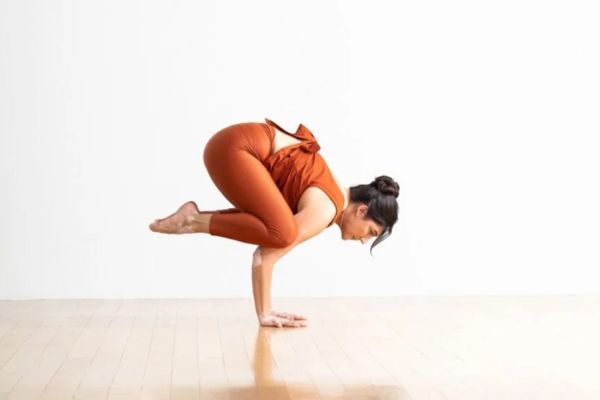
Many people think yoga is only about flexibility and relaxation. In reality, traditional yoga asana practice can provide a unique form of functional strength training that works differently from conventional resistance exercises.
Yoga develops strength through isometric contractions, slow eccentric loading, and prolonged muscle engagement. Poses such as Plank, Chaturanga, Warrior series, and Chair Pose require sustained muscular activation, particularly in stabilizing muscles that are often neglected in gym workouts.
These stabilizers include:
• Deep core muscles (transverse abdominis)
• Hip stabilizers (gluteus medius)
• Scapular stabilizers (serratus anterior and rhomboids)
• Spinal support muscles (multifidus)
Strengthening these muscles improves neuromuscular coordination, posture, and joint stability, which are crucial during perimenopause when ligament laxity and joint sensitivity may increase.
Yoga also enhances proprioception, the body’s ability to sense its position in space. Improved proprioception reduces injury risk and improves balance, which becomes increasingly important as women age.
Hormonal Balance: Yoga’s Unique Advantage
One of yoga’s most powerful benefits during perimenopause lies in its effect on the neuroendocrine system.
Through controlled breathing (pranayama) and mindful movement, yoga activates the parasympathetic nervous system, which counteracts chronic stress. This shift reduces cortisol levels and improves hormonal stability.
Certain yoga practices also stimulate the hypothalamic-pituitary-ovarian (HPO) axis, which regulates reproductive hormones. While yoga cannot prevent menopause, it can help the body adapt more smoothly to hormonal fluctuations.
Women practicing yoga regularly often report improvements in:
• Sleep quality
• Mood stability
• Energy levels
• Stress resilience
• Menopausal symptoms such as hot flashes
This hormonal regulation indirectly supports muscle recovery and strength maintenance.
Connective Tissue Health During Perimenopause
Another crucial aspect of strength that is rarely discussed is connective tissue integrity.
Estrogen influences collagen production, which affects the health of tendons, ligaments, and fascia. When estrogen levels decline, connective tissues may become less elastic and more prone to stiffness or injury.
Resistance training strengthens muscles effectively but does not always address fascial mobility or joint lubrication.
Yoga movements, especially slow transitions and dynamic flows, help maintain fascial hydration and elasticity. Twists, backbends, and hip-opening postures stimulate circulation within connective tissues, helping maintain structural resilience.
This becomes particularly valuable for preventing common perimenopausal issues such as:
• Frozen shoulder
• Lower back stiffness
• Hip joint discomfort
• Knee instability
The Role of Breath in Strength Preservation
Breathing patterns also influence strength and stability, yet they are often ignored in conventional training programs.
Yoga emphasizes diaphragmatic breathing, which improves intra-abdominal pressure regulation. This internal pressure acts like a natural support system for the spine and core muscles.
When the diaphragm, pelvic floor, and deep abdominal muscles work in coordination, they form what is known as the core stabilization cylinder.
During perimenopause, pelvic floor weakness and core instability can develop due to hormonal changes and previous pregnancies. Yoga breathing techniques such as Ujjayi and Dirgha Pranayama can help restore this functional integration.
Improved breathing mechanics enhance endurance, reduce fatigue, and support better strength expression during physical activity.
Yoga Poses That Build Strength for Perimenopausal Women
Certain yoga poses are particularly beneficial for maintaining muscular strength during perimenopause.
Chair Pose (Utkatasana) strengthens the quadriceps, glutes, and spinal stabilizers while improving joint endurance.
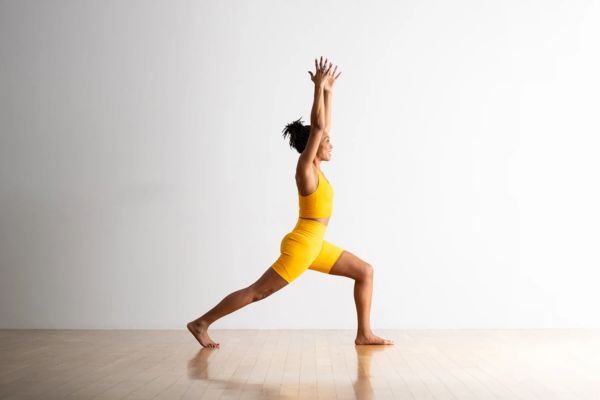
Warrior II (Virabhadrasana II) builds lower body strength and enhances hip stability.
Plank Pose strengthens the deep core muscles and shoulder stabilizers.
Bridge Pose (Setu Bandhasana) activates the posterior chain muscles, including glutes and hamstrings, which are crucial for preventing lower back strain.
Boat Pose (Navasana) targets the abdominal muscles and improves neuromuscular coordination.
Practicing these postures with proper alignment and breath awareness can create significant strength gains over time.
Why a Combined Strategy Works Best
The debate between yoga and resistance training should not be framed as an either-or decision. Both forms of exercise address different aspects of strength and physiology.
Resistance training primarily enhances muscle hypertrophy and bone density, while yoga improves functional strength, joint stability, and nervous system regulation.
A combined strategy allows women to benefit from the strengths of both approaches.
An ideal weekly structure may include:
• 2–3 days of moderate resistance training
• 2–3 days of yoga practice focusing on strength and mobility
• 1 day of restorative or breath-centered yoga
This combination supports muscle maintenance, hormonal balance, and recovery.
Listening to the Body During Perimenopause
One of the most important principles during perimenopause is adaptive training.
Hormonal fluctuations mean that energy levels and recovery capacity may vary from week to week. Instead of following rigid workout routines, women should learn to adjust intensity based on how their body feels.
Yoga cultivates interoceptive awareness, the ability to sense internal bodily signals. This awareness helps practitioners recognize when the body needs rest, mobility work, or strength training.
Developing this sensitivity prevents overtraining and promotes long-term consistency.
The Psychological Dimension of Strength
Strength during perimenopause is not only physical. Many women experience emotional shifts, identity changes, and increased life stress during this phase.
Yoga integrates physical practice with mindfulness and self-regulation, helping women maintain emotional resilience.
Meditative practices stimulate the prefrontal cortex, which improves emotional regulation and reduces anxiety. When the mind is calmer, motivation to maintain physical health becomes stronger.
This psychological stability plays a critical role in sustaining long-term strength and vitality.

Final Thoughts
Perimenopause is not a decline but a physiological transition that requires a more intelligent approach to movement and strength.
Muscle loss during this phase is influenced by hormonal fluctuations, metabolic changes, and stress levels. Resistance training provides powerful stimulation for muscle growth and bone health, but it does not fully address nervous system balance, connective tissue health, or hormonal adaptation.
Yoga fills these gaps by improving neuromuscular coordination, stress regulation, breathing efficiency, and joint stability.
Rather than choosing between yoga and resistance training, the most effective strategy is integrating both in a balanced and mindful way.
When practiced consistently, yoga not only helps preserve strength during perimenopause but also cultivates resilience, body awareness, and inner balance.
For many women, this phase ultimately becomes an opportunity—not just to maintain physical strength, but to rediscover a deeper connection with their body and wellbeing.